
The Last Broadcast (Part 3)
Rafael read it first, twice, and then handed it to Zeynep and went to make coffee, which was what he did when he already knew his answer and didn't like it.
“We take it,” he said from the kitchen.
Zeynep put the folder down. “You're joking.”
“I'm not joking. I've got a baby coming in October.” He came back with two cups and gave her one. “Look at the actual choice. Sign this, and we're on the air Monday with a news hour we can't use twice a year. Don't sign it, and in six weeks there's nothing on 88.7 but noise. An independent station that nobody can hear isn't independent. It's just off.”
“And a station that can't say the word ‘mill' isn't a station,” Zeynep said. “It's a forty-minute ad with weather in it.”
“Then say the word ‘mill' on your own time.”
“That's my job, Rafael. That is the job.”
They had shared two rooms for three years and had never once shouted at each other, and they didn't shout now, which somehow made it worse.
Sanjay sat with his hands flat on the table and let them go. He'd been a leader long enough to know that this argument had to happen out loud, once, in the room, or it would happen for years in the hallway.
“I'll say it plainly,” Zeynep said at last. “If we sign, I'm gone. Not to punish anybody. I just can't read that news hour and call it news.”
Rafael looked into his coffee. “There's a job in Redding,” he said. “Engineering. I said no in April. They asked again last week.”
“You didn't tell me that.”
“I'm telling you now.”
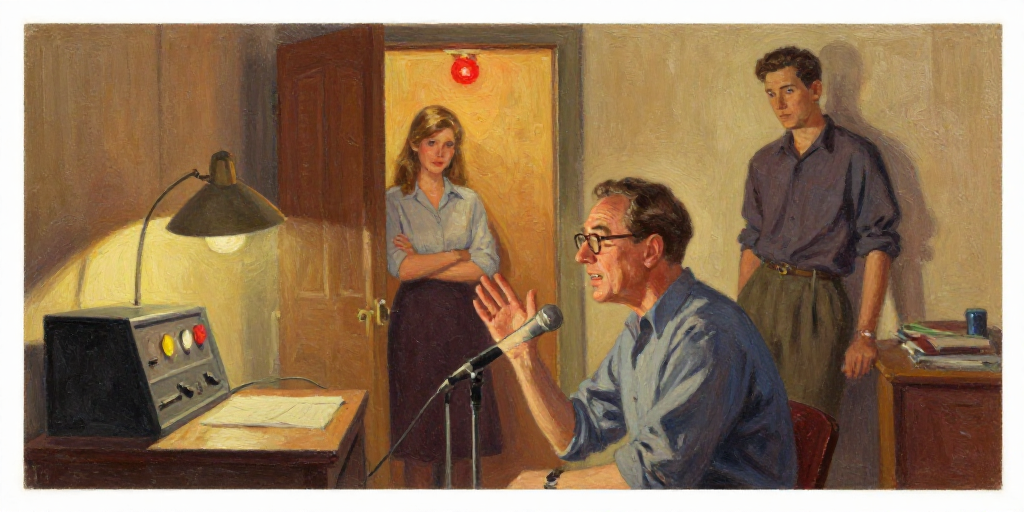
Nobody signed anything that afternoon. At six, Sanjay went on air alone, and instead of the local news he read clause nine, word for word, all four sentences of it, in his flat and careful voice.
“That's the offer,” he said. “I have until Friday. Now you know exactly what I know.”
Then he played a song, and the phones started.