
The Last Broadcast (Part 2)
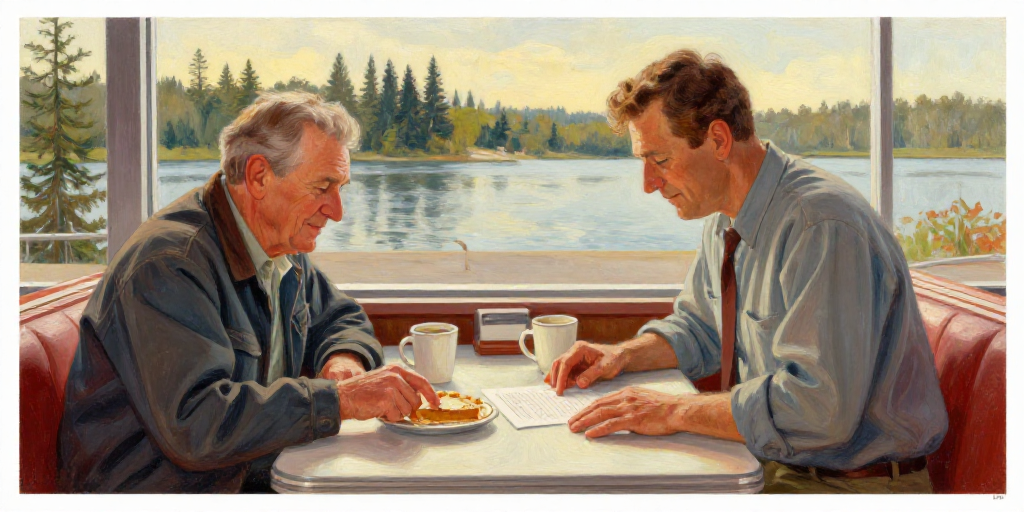
They met at the Riverside Diner, in the booth by the window, because the man said he didn't like offices.
He owned Ridge Motors, the car lot at the south end of town, and his family had owned the lumber yard before that. He was maybe sixty. He ordered pie and didn't eat it.
“I've listened to your station my whole life,” he said. “I don't want to read that it closed.”
Then he took a folder out of his bag — a folder, again, Sanjay thought — and put it on the table.
The numbers were better than anything Sanjay had seen in three years. Rent covered. The transmitter covered. Three salaries, with a small raise for the two young ones. Two years, and an option for two more.
“That's the deal,” the man said. “I'm not asking for my name on the building.”
“What are you asking for?”
The man turned the pages and put his finger on clause nine. Sanjay read it once, and then read it again slowly, the way you read something when you hope you've made a mistake.
The station would keep its music, its weather, its high school baseball. But the funder would have final approval of the news hour. No story about the mill, the county road contract, or “any business in which the funder holds an individual interest,” without his written agreement.
“It's normal,” the man said. “Every station has somebody behind it. Right now you've got nobody, and look where that's got you.”
“And if there's a story about the road contract?”
“Then there isn't one.” He put his fork down. “Look. I'm not the bad guy here. I'm the only offer on the table.”
That last part was true, and both of them knew it.
Sanjay drove back up the hill with the folder on the passenger seat. He climbed the stairs, put it on the table between Zeynep and Rafael, and sat down.
“Read clause nine,” he said. “Then tell me what we are.”