
When You're Not Sure, Ask
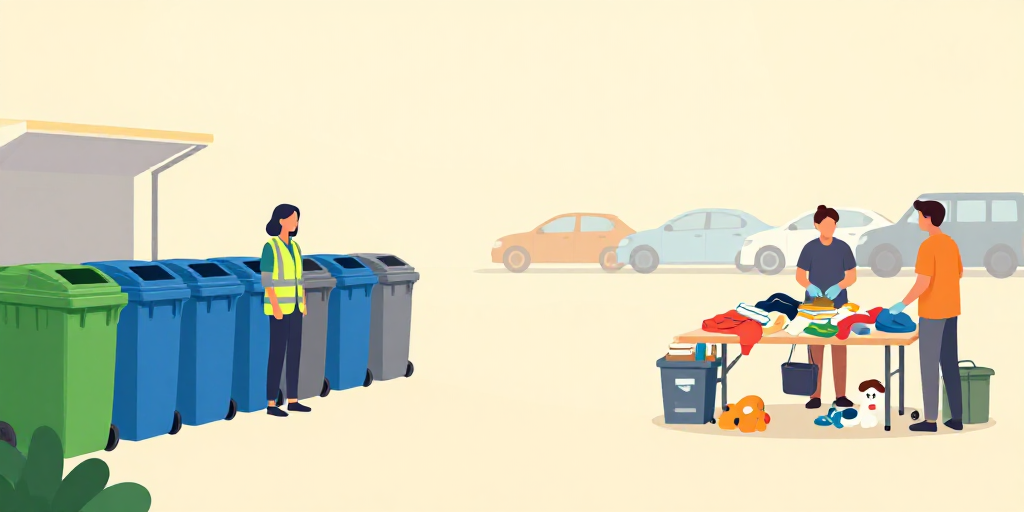
On Saturday mornings, the community recycling centre in Leeds opens at nine, and a line of cars is already waiting. Priya, the volunteer coordinator, has run the place for three years. She knows every bin by heart.
Two new volunteers arrive, a little nervous. Priya hands them gloves and gives them a quick tour.
“We sort everything here,” she says. “Glass goes in the green container.” “Paper and card go in the blue one.” “Plastic goes over there.” “The rule is simple: when you’re not sure, ask.” “Don’t guess.”
She points to a long table by the back wall.
“People donate plenty of things they don’t need anymore,” she says. “Clothes, books, old toys.” “We check each one.” “If it’s clean and it works, we keep it for the shop, and the money helps the centre.”
One volunteer holds up a broken radio.
“That’s just waste,” Priya says. “It can’t be fixed, so it goes in the electronics box.” “We try to recycle the parts.”
The morning is busy, and the volunteers learn fast. They reduce a mountain of rubbish into neat, sorted piles. By noon, they are tired but proud.
“You see?” Priya says, pulling off her gloves. “People think this work is boring.” “It isn’t.” “Every bottle, every box — it’s all a resource, if you treat it like one.” “We’re not throwing things away here.” “We’re saving them.”
She looks at the cars, still arriving. “And there’s always a range of things to save.”