
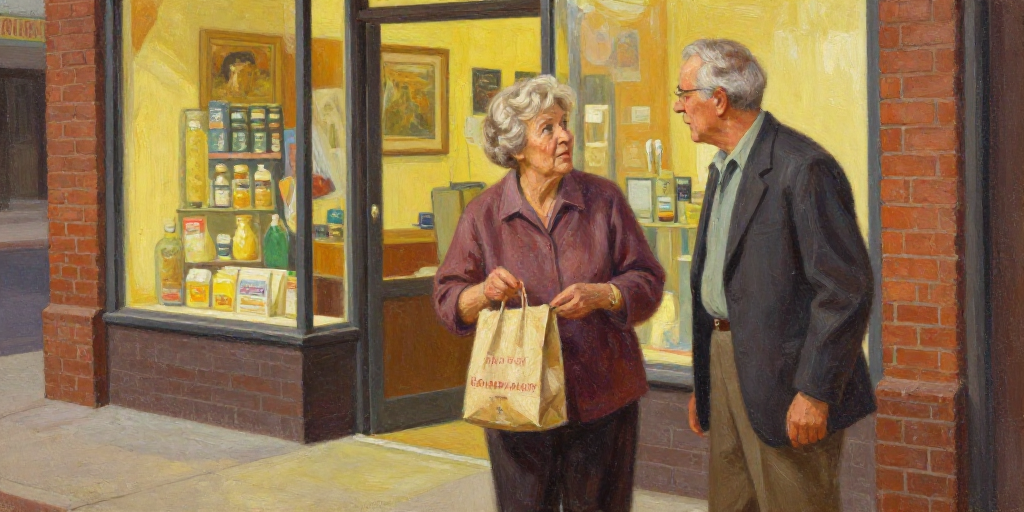
The Paper Bag
Miriam had kept the paper bag flat inside a cookbook for twenty-two years. It had been white once. Now it was the color of weak tea, and the name printed across it — Kessler's, in curly brown letters — had almost worn away along the folds.
Walter drove. He hadn't been back to Ferry Street since their mother sold the house, and he mentioned that twice before they left the highway.
“You know it won't be there,” he said.
“I know.”
“That kind of place doesn't exist anymore. Nobody stands behind a counter at four in the morning for rolls.”
She had looked it up, of course. The internet had given her a definite answer months ago — permanently closed — and she had decided not to believe a website.
The building was still standing, which was somehow worse. Same door, same three stone steps, same bell above it. But the window that had held trays of bread now held phone cases in rows, forty or fifty of them, every one the same brand.
Walter stopped on the sidewalk with his hands in his pockets. “Well,” he said.
Inside, the shop was cold and very bright. Miriam looked down and found the floor she had expected: small green and white tiles, the ones she used to count while her mother paid. Cracked in two places now, half hidden under the display tables, but there.
“Looking for a case?” the young man at the counter asked.
“No, thank you,” Miriam said. “I used to buy bread here.”
He glanced at the tiles, then at her, and decided to be kind about it. “Huh,” he said. He was maybe nineteen.
They bought rolls at the supermarket on the way out of town. Walter ate one in the parking lot, standing next to the car with the door open.
“It's better bread,” he said. “That's the annoying part. It's honestly better.”
Miriam took the paper bag out of her coat pocket. She didn't put anything in it. She folded it along the old lines and put it back.