
The Line He Got Wrong
Selin has been writing poems since she was fourteen, and until this spring she had never shown one to anybody except her sister.
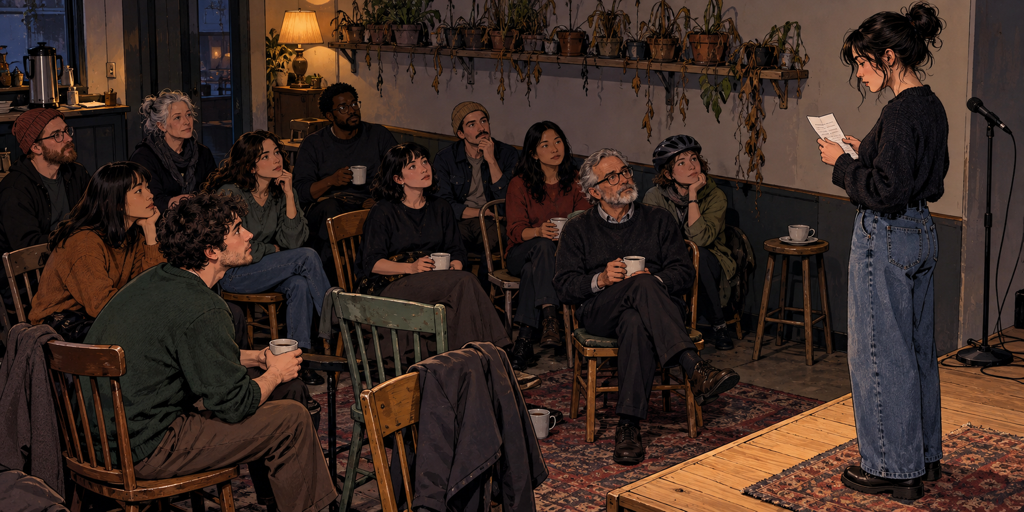
The reading series happens on the first Tuesday of every month, in the back room of a cafe on Wells Street, under a shelf of dead plants. Anyone can send in a poem. Selin wrote the email in November, deleted it, wrote it again in January, and finally sent it in March at twenty to two in the morning, when it felt less like a decision.
The reply came four days later. Five minutes each, it said. Please arrive by seven.
She counted the room when she got there. Eleven people, and two of them worked at the cafe. The microphone wasn't working, so everybody read without it, and the coffee machine behind the wall screamed twice during the poem before hers.
Her hands shook. She read too fast, and she knew that she was reading too fast, and she couldn't slow down. The poem is about her grandfather's hands and about the last hour of light in an empty apartment. It takes ninety seconds. She was off the little stage before she understood that she had finished.
Nobody said anything memorable to her afterwards. The host thanked her. A woman with a bicycle helmet asked her where the toilets were.
Then, at the door, a man in his sixties stopped in front of her, holding his cup in both hands, and repeated a line back to her. He had it wrong. She had written that the light leaves the room last. What he said was, “It's the light that stays the longest.”
Selin has thought about that sentence every day since. It's a better line than hers, and it belongs to a man whose name she never asked for, and now, when she reads the poem at home, that is the line she means.