
Six O'Clock
There was a metal bowl, and there was a man, and for two years I hated both of them.
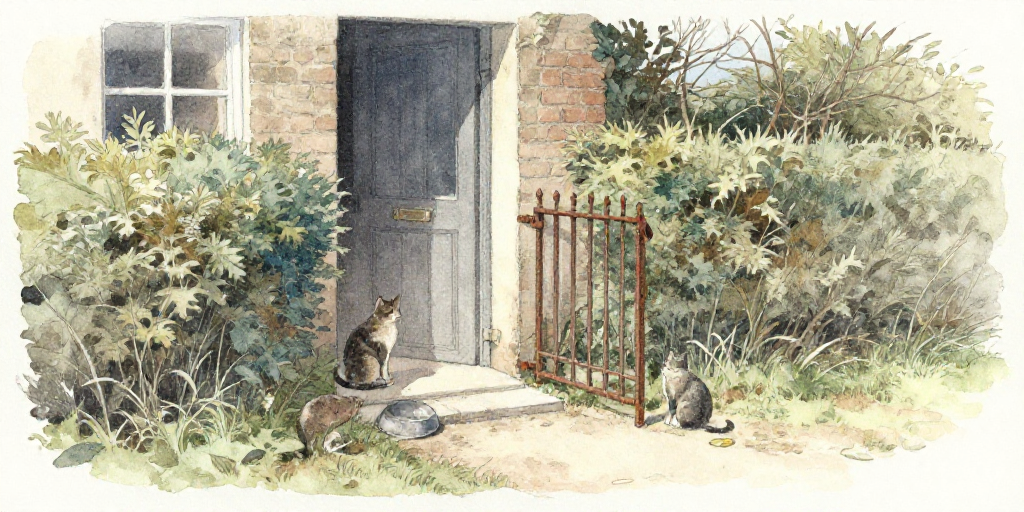
He lived in the last house on the row, the one with the broken gate. Every evening at six he came out onto his step with that bowl and a wooden spoon and hit it — bang, bang, bang — and shouted something in a voice like a door closing. I was usually asleep on his wall, in the last warm piece of sun. I would go straight over the wall into the alley and stay there until dark.
I thought he was cruel. It's an easy thing to think about a man who is loud and old and shouts at the place where a cat is sleeping. In two years I never once asked myself what his intention might be. Cats are not fair. We decide about a person in one second, and then we spend years collecting proof.
Here is what I got wrong. In October I was under a car on the other side of the road when the bowl started, and for the first time I was watching instead of running. Three cats came out of the gardens. The gray one from the school fence. The small one with the bad ear. All of them going toward the noise, not away from it. Then the man put four plates down on the step.
The bowl was not a warning. The bowl was a bell.
He had been calling me for two years, and I had been leaving.
In February a white van came, and a woman carried boxes out to it, and after that the last house on the row stayed empty. I don't know which of the things that happen to old men happened to him. I only know the step is cold now.
The bowl is still there, upside down by the gate. At six o'clock I sit next to it with the others. Nobody hits it. We wait anyway.