
Malia's Oven (Part 3)
She baked all night on the new oven, learning it as she went. The left side ran hot, so every tray had to be turned after four minutes. By six in the morning she had two hundred manoushe in the van and a burn on her wrist the shape of a comma.
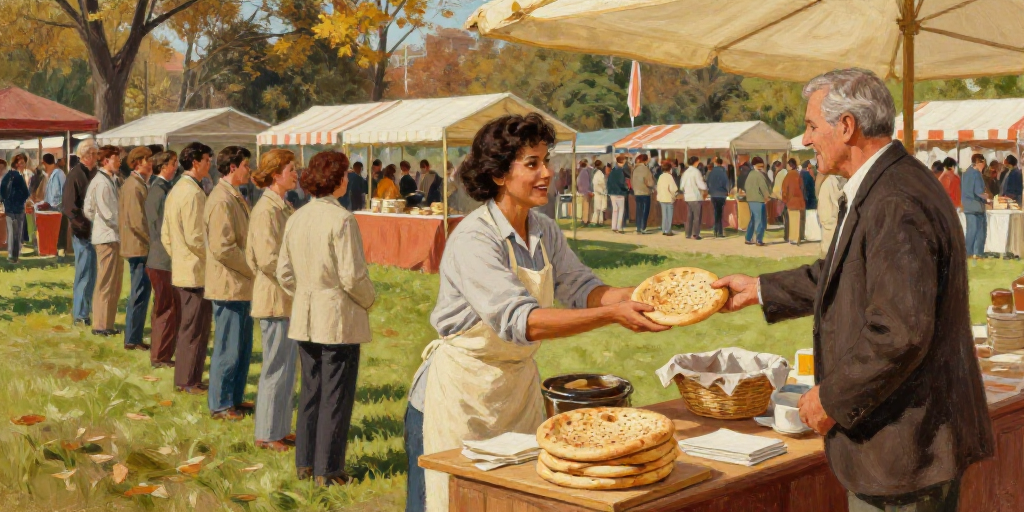
The park smelled of sugar. Her stall was number forty-one, between a man selling cupcakes with the city’s football badge on them and two sisters with a sourdough table like a shop window.
The introduction at nine was general and short — welcome, be kind to the judges, no plastic plates. Then the judges came around in a slow line, five of them, tasting a piece of everything and saying almost nothing.
Malia’s bread did not win. First place went to the sourdough sisters, and it was fair; their loaves were beautiful.
But at four o’clock a woman with a notebook came back to stall forty-one with a photographer, and asked how to spell za’atar, and how long the family had been making it, and whether the story about the oven was true.
The feature ran in the local paper on Thursday: a whole page under the headline “The immigrant bakers changing how this city eats breakfast”, with a photograph of Malia’s hands on the dough, and one line at the end about a broken oven and six people in a doorway at midnight.
By Saturday morning the line went out the door and past the phone-repair shop. She sold out at half past twelve, three days running, and on the fourth day she came in at three in the morning instead of four.
The left side of the oven still runs hot. She turns the trays. It’s her oven now.