
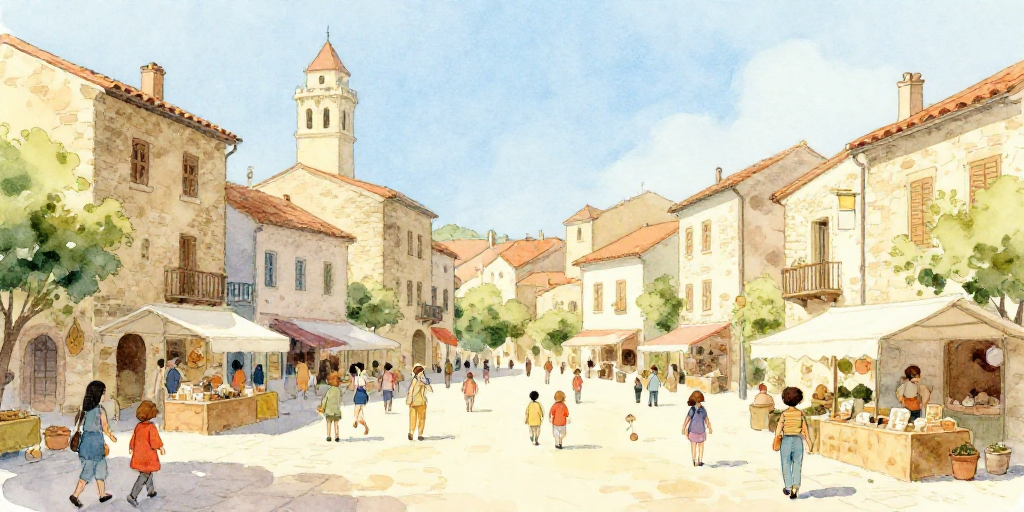
Why Some Towns Fill Up
Why do some small towns fill with visitors while others, just an hour away, stay empty? The answer is rarely luck. Towns that thrive almost always work hard to attract the people who pass through.
The first rule is a clear attraction. A town needs one thing worth the trip — an old castle, a famous market, a beach, a strange museum. Visitors travel further for one strong reason than for several weak ones. A single global name, like Pisa's leaning tower, pulls more people than ten pretty streets.
The second rule is timing. Smart towns watch the calendar. They know that the busiest departure days fall around holidays, so they plan festivals for those exact weeks. A quiet village can be more crowded than a city for three days in summer, then sleep again.
The third rule is exchange. The best tourist towns offer something local in return for the visitor's money — food you can't get at home, a craft made on the spot, a story only the people there can tell. When a town simply copies the average mall, travellers feel cheated and don't come back.
Money matters, of course. But the towns that last understand a quieter truth: people don't travel to spend. They travel to feel somewhere is real.