
Two Long, One Short, One Long
The latest timetable had the branch line printed in small type at the back, under a note that said “service withdrawn from 4 November.” Magnus found it in about nine seconds, the way you find your own name in a list.
“We’ll go on the Saturday,” he told Cormac. “You’ll be glad you were on it.”
Cormac was eleven and wanted to be at football. He came anyway.
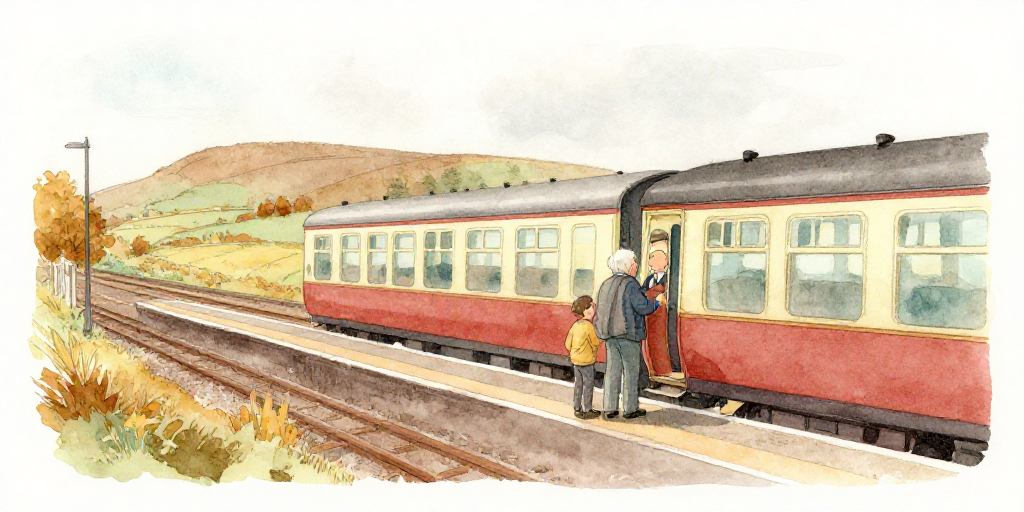
There were six people on the 9:40 out of Craigmore, counting the two of them and the driver. Magnus took the seat facing forward on the left, which he said was the only seat, and named things out of the window as they went: the water tower with no top, the bridge over the river, the field where a man once kept two camels. Cormac didn’t believe the camels until his grandfather produced a photograph he had been carrying for forty years for exactly this purpose.
“Nobody’s on it,” Cormac said, somewhere after the second stop.
“No.”
“Is that why they’re closing it?”
“That’s why.”
Magnus didn’t make a speech about it, which surprised Cormac, who had once heard his grandfather make a speech about a level crossing.
At the far end the driver was waiting for them on the platform. She had known Magnus for years; he had trained her, in the winter of 2003, on this line, in weather he described as “character-building.” She let Cormac stand in the cab, showed him the horn, and told him what the drivers on this line always sounded at a crossing: two long, one short, one long.
He sounded it once. The noise went out flat across the fields and came back off the hill behind the station, and every bird in the trees left at the same time.
On the way home Cormac kept his face at the glass. Before each crossing he said it under his breath, two long, one short, one long, and he got it right every time, on a line that would never have another train on it after four o’clock.