
The Old Motorcycle (Part 2)
When Rafael and Julie decided to restore their grandfather’s motorcycle, they had a number in their heads, and the number was two hundred euros.
By the end of the second Saturday they had a list instead. Two tires. A battery. Cables, because the mice had eaten most of them. Oil, brake parts, a mirror to replace the broken one, and paint, if there was anything left at the end, which there wouldn’t be.
“Six hundred,” Julie said. “Maybe seven.”
Rafael, who worked three days a week at the supermarket, said nothing for a while. Then: “Okay. So we find it.”
What followed was the busiest spring either of them could remember. Julie took Saturday shifts at the restaurant by the harbor, where tourists left their plates half full and their tips in coins. Rafael washed cars at the ferry, painted a neighbor’s fence, carried boxes for anyone who asked, and stopped buying anything at all.
Every Sunday they worked in the shed. Julie turned out to be better with her hands; Rafael turned out to be better at watching videos on his phone and explaining them loudly. By June the tank was so shiny you could see the roof in it, the new tires were on, and when they pushed the machine down the hill and let the clutch out, the engine turned.
It turned. It didn’t start.
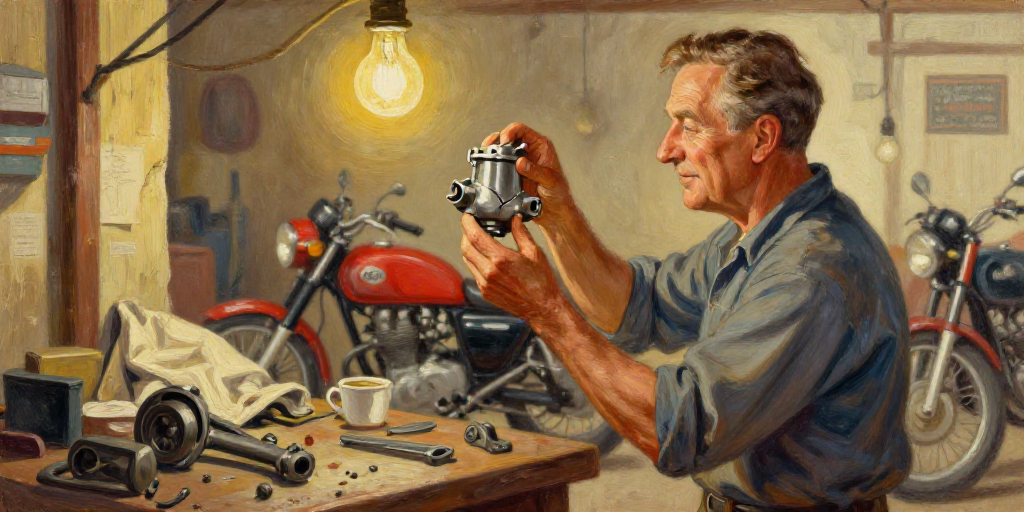
They took the bike to the garage above the church on a Tuesday. The mechanic there had known Papi for forty years. He listened to the engine for about eleven seconds, then took a small metal part off the side of it and held it up to the light — the carburetor, the part that mixes the fuel and the air.
There was a crack in it, thin as a hair.
“Can you fix it?” Julie asked.
“No.”
“Can we buy a new one?”
He put the part down gently, the way you put down something that is finished.
“Not on this island,” he said.