
The Fish Was Fine
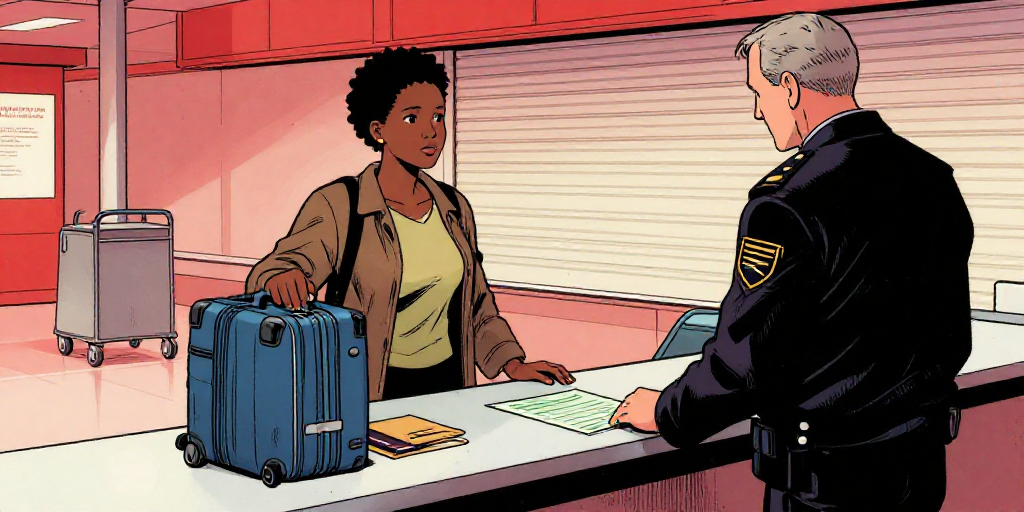
(The red channel at customs, Charles de Gaulle, Terminal 2E, just after eleven in the morning.)
Nkechi: Good morning. I’ve got something to declare.
Bertrand: Then you’re in the right place. Half the people who come through that door have taken a wrong turn. Passport, please.
Nkechi: Here. My visa’s on page nine.
Bertrand: Thank you. So, what are we declaring?
Nkechi: Dried fish. Two kilos of it, in the blue bag. My mother packed it in Lagos and I’ve been worried about it since Wednesday.
Bertrand: Is it sealed?
Nkechi: Sealed, labeled, and the shop printed the date on the bag.
Bertrand: Then it’s fine. Sealed, dried, from a shop, under two kilos, and you’re allowed to bring that in. You didn’t need this desk for it.
Nkechi: I’ve read the immigration site four times. It never says any of that.
Bertrand: No site ever does. Anything else with you? Cash?
Nkechi: Cash?
Bertrand: Money. Notes. Anything over ten thousand euros has to be declared at the border. Yours or somebody else’s, it doesn’t matter.
Nkechi: … Twelve thousand. It’s my brother’s first year at university. I’ve already paid the deposit and the rest is in the brown envelope.
Bertrand: Right. That’s the one we actually needed.
Nkechi: Am I in trouble? My connection’s at twelve forty.
Bertrand: You’d be in trouble if I’d found it and you hadn’t told me. You’ve just told me, so it’s a form.
(He takes a green sheet out of the drawer and turns it around.)
Bertrand: Name, amount, currency, who it’s for. Sign at the bottom.
Nkechi: That’s it? That’s the whole thing?
Bertrand: That’s the whole thing. Carrying it isn’t illegal. Not saying it is.
(She signs. Her hand isn’t quite steady.)
Nkechi: I practiced what to say about the fish for six hours on that plane.
Bertrand: Everybody practices the fish. Nobody ever practices the envelope. Gate K, keep left — you’ll make it.