
Ask Me Again
The call came on Tuesday, four days before the competition. The lead singer had laryngitis: no voice at all, doctor's orders, two weeks of silence.
Kiran was the assistant conductor of the Ashbourne Town Choir, which mostly meant she unstacked the chairs, photocopied the music, and played the first note on the piano when the conductor's arm got tired. She had joined nine years ago because she loved the sound thirty people make together in a cold hall. She had never once wanted anybody to look at her.
“You know the part,” the conductor said at Wednesday's rehearsal. “You've been singing it under your breath for a month. I've heard you.”
“I hate this,” Kiran said.
“I know.”
“No, I mean personally. Standing at the front, everyone's eyes, all of it. I hate it.”
“I know,” the conductor said. “So do you want to participate, or do you want to watch?”
Wednesday's run-through was bad. Kiran's voice came out thin, somebody's phone rang in the middle of it, and she was grateful for the interruption. Thursday was better. On Friday she didn't sing at all, drank hot water, and hated Friday too.
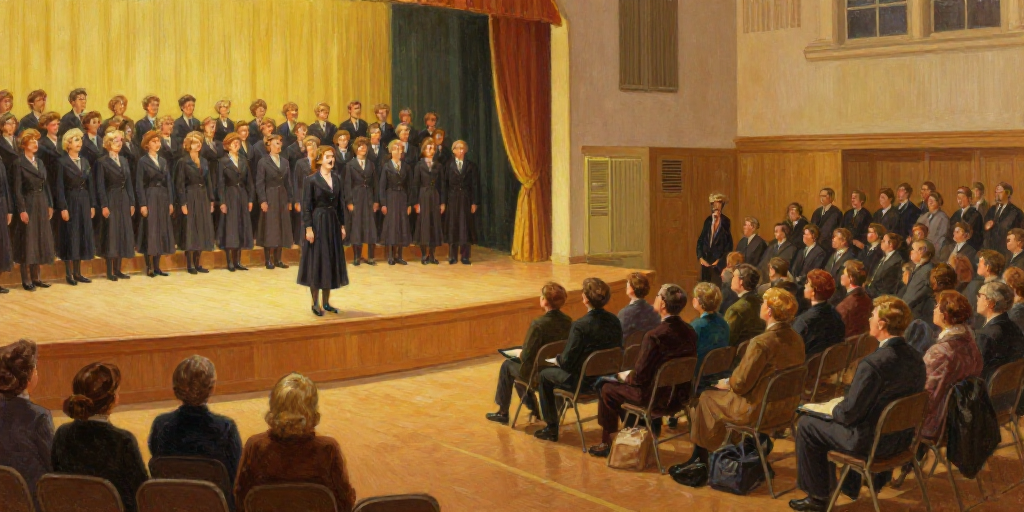
The hall in Derby was too warm and smelled of floor polish. Sixty people in the audience, most of them somebody's family. Kiran stood where the lead singer always stood, half a step in front of the others, and found that from there she could hear everything: the breathing, the low voices moving underneath her like a floor. It was incredibly loud and incredibly close. She sang her eight bars and did not fall over.
Ashbourne came second.
Afterwards, in the car park, one of the men from the back row said what everybody had been thinking all evening: that Kiran should take the lead next year.
She thought about it honestly, for about six seconds. Then she picked up the box of photocopies and put it in the boot of her car.
“No,” she said. “But ask me again if she loses her voice.”