
What a Railway Means by On Time
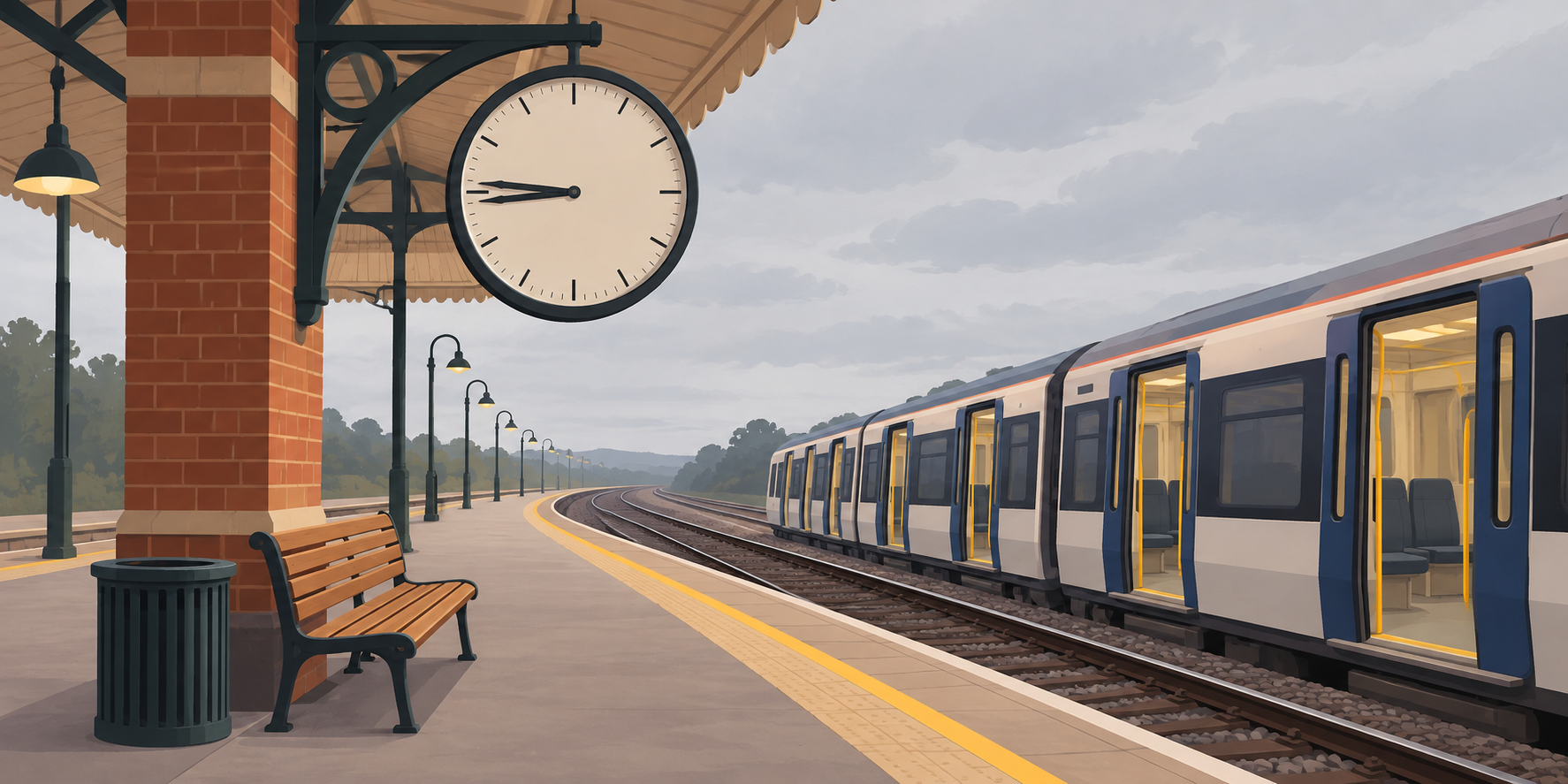
Your train was due at 9:09 and the doors opened at 9:14. Late, obviously. And yet that train is quite likely to be counted as on time, and the railway is not lying about it. It is answering a different question from the one you are asking on the platform.
Three things sit behind the number.
The first is the limit. No railway means “to the second.” A figure is published against a threshold, and the threshold is a choice: on some networks a train is on time if it arrives within a minute, on others within five, and on the longest routes the limit is more generous still. Change the threshold and the same trains produce a different result, without a single wheel turning any faster.
The second is the measuring point. On many networks punctuality is recorded where the journey ends. A train can leave three minutes down, run three minutes down through every stop for two hours, and still be logged as punctual, because by the time it reaches the coast it will have made up those three minutes on the last quiet stretch. Everybody who got off earlier was late. None of them are in the number.
The third is padding, which is the interesting one. Timetables are written with more minutes in them than the train needs. That is why a service which is about to leave a busy station two minutes down is likely to arrive on time anyway, and why the guard can hold the doors for someone running down the stairs without much drama: by the last stop the train will have recovered the whole delay.
Padding is honest. Passengers plan around a timetable, not around an average, so a promise that can be kept in bad weather is worth more than a fast promise that breaks every Friday. Recovery time is what stops one late train from making eleven others late behind it.
Padding is also, quietly, a little dishonest. You can improve a railway’s punctuality without improving a single journey. Add four minutes to every timetable tonight and by this time next year the operator will have published a better figure for a slower service. Nothing was fixed. The promise was simply moved.
So the published number is a real measurement. It states how well the railway kept the promise it wrote down, and that is worth knowing, because a network which cannot keep its own timetable cannot be planned around at all. What it does not state is whether the promise was ambitious, or whether your particular train, on your particular morning, stood outside the station for six minutes waiting for a platform.
Both facts matter. Only one of them gets printed on the poster. When you next see a punctuality figure quoted, it is fair to believe it, and just as fair to notice that by the end of today the railway will have measured many thousands of arrivals, and not one of those measurements was about you.