
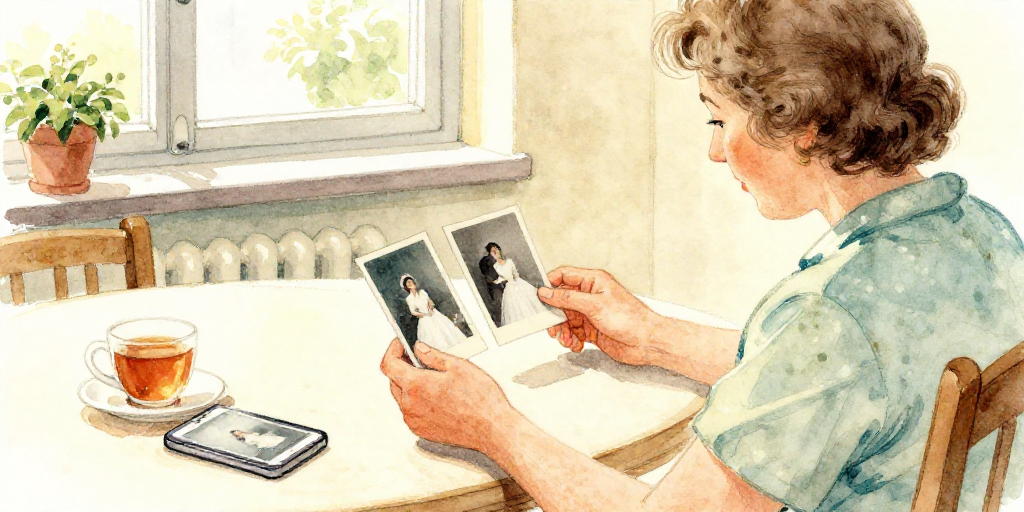
Two Photographs
My granddaughter got married in May, and the whole thing was finished by ten o'clock at night. It was beautiful, it was expensive, and it was over. I'm not complaining. I want to be clear about that. I'm comparing.
When I got married, in 1968, in a village outside Zgharta in the north of Lebanon, the wedding took three days. It started on the Friday in my mother's kitchen, with the women, and it ended some time on Sunday. Nobody sent an invitation, because everybody already knew. The food came from the neighbours: whatever anyone had, they cooked. Somebody's uncle brought a whole lamb, and we are still talking about that lamb fifty-six years later.
That was the main feature of the whole weekend, actually. Nobody had a schedule.
My granddaughter had a schedule. It was printed on a card, with the times on it. Six-thirty, dinner. Eight o'clock, first dance. There was a photographer, and a second photographer, and a small flying camera that made a noise like a fridge. The contrast is not really about money, I think. We spent everything we had too. It is about the clock.
And the photographs. This is the part I keep coming back to.
I have two photographs from my wedding. They're grey, and in one of them my husband's face is not in focus. But I can tell you the name of every person standing in that room, and I can tell you what my mother said about ten seconds after the picture was taken, because I have had fifty-six years to remember two photographs.
My granddaughter has four thousand. She showed me some of them in August, on her phone, and she scrolled with her thumb, and then she stopped and turned the screen towards me.
“Grandma,” she said, “who is the man in the blue jacket?”