
The Last Broadcast (Part 4)
The first envelope came under the studio door on Wednesday morning: two twenty-dollar bills and a note that said “for the fan in the window.”
By Friday there was a jar on the counter at the hardware store, and another at the fishing shop, and the high school had run a car wash and brought $310 in a coffee can, mostly in quarters. A retired teacher offered to take the Sunday morning shift for nothing. Two kids offered to do a Saturday show about, as far as anyone could tell, nothing in particular. A mechanic from the shop on Dunsmuir Avenue said he'd read the river and fishing report every day at seven, and he has done it ever since, badly and with great confidence.
It came to eleven thousand dollars and about forty unpaid hours a week. It wasn't a rescue. It was eight months, and after that it would depend on the town again.
Sanjay called Ridge Motors on Friday and said no, and thank you. The man said he was sorry to hear it, and that the offer was good until it wasn't, and then he wished them luck, and he meant it.
Rafael took the Redding job.
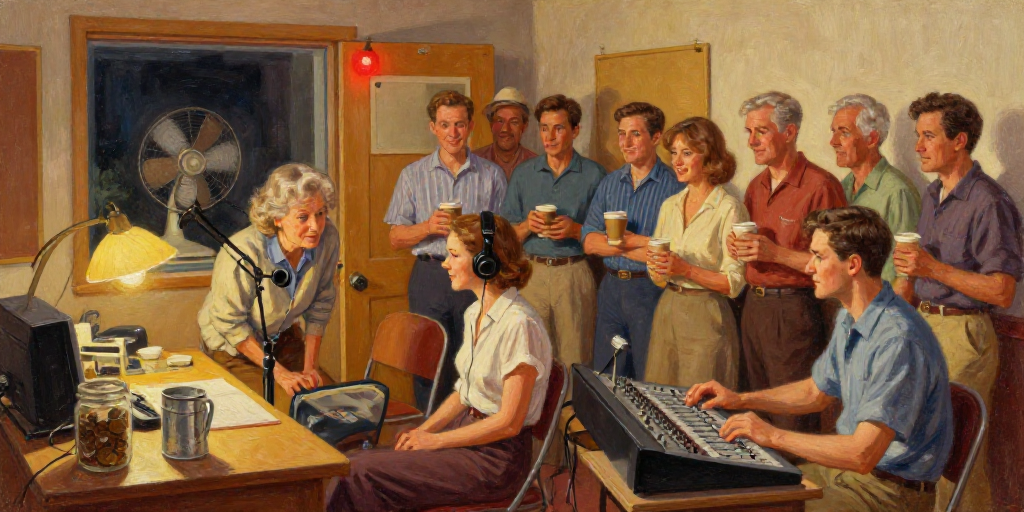
They kept the date anyway. The closing show had been on the calendar for three weeks as “the last broadcast,” so Zeynep decided they would do it on the thirtieth and simply change what it was about. Rafael drove down and ran the board, because he said nobody else could keep the old thing from humming.
They read out every name. It took an hour and ten minutes. The woman from the laundromat came in person, went shy in front of the microphone, said only, “Well. Thank you all,” and handed it back like it was hot.
At ten o'clock Zeynep leaned in.
“So that was the last broadcast,” she said. “The last one of the year we nearly closed. We'll be here tomorrow at six.”
Rafael's handwriting stayed on the whiteboard by the door, the transmitter numbers in his tall square letters, for a long time after that. Nobody wanted to be the one to clean it off.