
The Ice-Cream Notebook
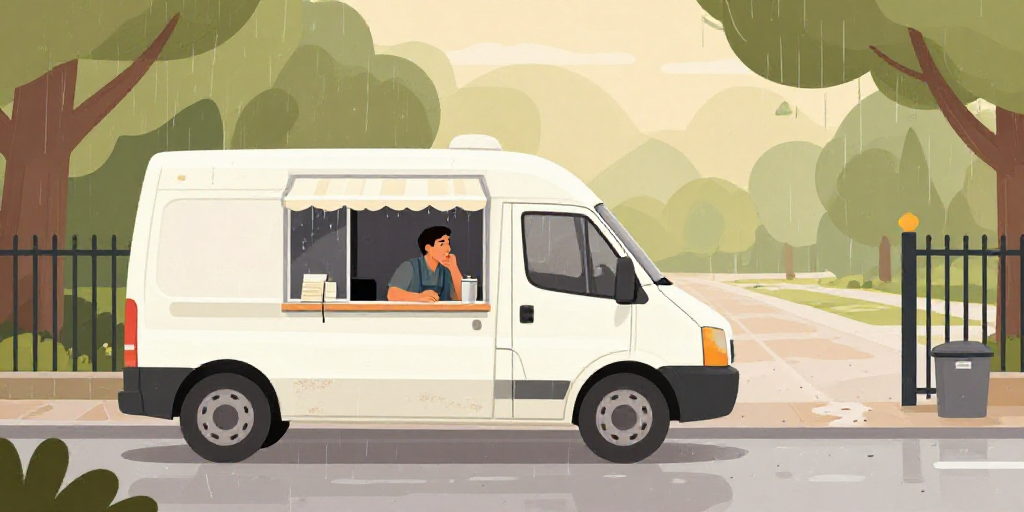
On the last Tuesday in July, Mateo sold eleven ice creams.
It was his fourth wet day in seven, and eleven is not a number a business can live on. His van has stood at the north gate of Marshall Park in Dayton since 1988, when his grandmother Grace bought it second-hand and painted it herself, badly, over one weekend.
Grace also started the notebook. Every evening she wrote down three things: the date, the weather in one word, and the money. Mateo still keeps it — same three columns, same one-word weather — which means his family owns something unusual: a thirty-eight-year daily record of how warm it felt at one gate of one park. Ask him to reflect on those summers and he doesn't reach for a memory. He reaches for the book.
“People think the impact is simple,” he says. “Hot summer, good year. It hasn't worked like that for a while.”
He turns back through the pages. Grace's Julys in the nineties are boring: warm, warm, cloud, warm, warm. The recent ones are not boring. Last August gave him nine days above ninety-five degrees, when he sold out by two in the afternoon and had to drive back to the depot for more. Then came eleven straight days of rain, and one week when sales didn't touch two hundred dollars.
The risk, he says, isn't the heat, and it isn't the rain either. It's that he can't guess anymore. He orders stock on Thursday for the weekend and pays two students by the hour, and he makes both of those decisions three days before he knows what the sky is going to do.
Does he relate any of this to a changing climate? He's careful with the question.
“I'm not a scientist,” he says. “I sell ice cream. But the numbers are in the book, and the numbers changed.”
A teacher at the community college has asked to photograph the notebook for a project on local weather records. Mateo said yes, on one condition: he gets it back by Friday. He still needs it.
This winter he added coffee and hot chocolate to the van. On that wet Tuesday in July, he sold eleven ice creams and forty-two coffees.
“Grace would have hated the coffee,” he says. “She'd have counted the money, though.”