
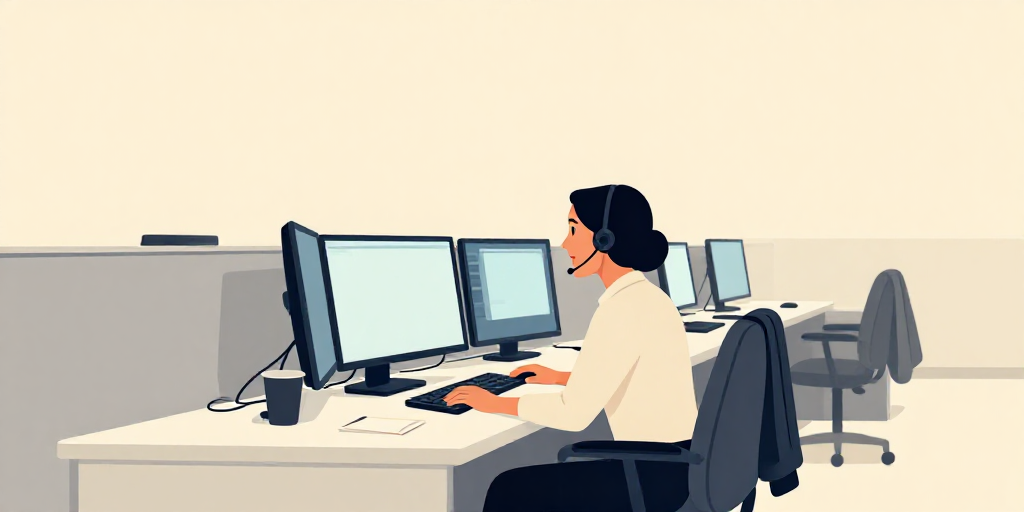
Every Question Is Buying Time
You dial the emergency number — which one it is depends on where you are — and somebody answers, and the first thing they want is not the story. It's the address. You have something urgent to say about a person on the floor, and instead you are asked, very calmly, for a street name and a number, and then for a floor, and then for the name of the building. It feels like the wrong order. It feels like a form is being filled in while somebody waits.
It isn't. The address is taken first because it is the first thing that can be used. As soon as it is entered, it appears in front of the people who send vehicles, and a crew can be assigned and moving while the call is still going on. The caller hears more questions. Somewhere else, in a room the caller will never see, doors are already closing on an ambulance.
The questions that follow are not there to decide whether help is sent. They decide what kind. Is the person awake? Are they breathing normally? Is there heavy bleeding? Was there a fall, and how far? Emergency help is not one size: depending on the answers, a second crew may be added, or a doctor, or the fire service, or the police, and the call may be moved up the queue ahead of somebody else's. A caller who refuses to answer, in the belief that this saves time, is holding the response at its most general setting.
Many of the questions are also instructions in a thin disguise. Press hard on the wound and don't lift your hand to look. Roll them onto their side. Put your hands here, and count out loud with me. Unlock the front door. Put the dog in another room. Send somebody down to the street to wave the crew in. None of this is paperwork. The handler is treating a patient through a telephone, using the only pair of hands available, which happen to be yours.
That is also why the line should be kept open until you are told otherwise. Situations change: breathing stops, or starts again, or the injured person stands up and insists they're fine. Whatever changes can be passed on while the crew is driving, so that what they walk into is what they were expecting. A caller who hangs up to ring a relative removes the crew's eyes and their own instructions in the same second.
A few small things help. Know the address you are calling from, including the floor and the apartment number. Give a landmark. Call from where the person is, if you possibly can, and put the phone on speaker so that both of your hands stay free. Answer the question that was actually asked, rather than the one you were expecting.
And when the questions start to feel like a delay, it is worth remembering what has usually already happened. The address went out at the beginning. Everything after it is being spent on what arrives — not on whether anything was sent.