
The Old Rowboat (Part 2)
They turned the boat over on Saturday morning, and the crack was the first thing they saw. It ran from under the middle seat almost to the back, a thin dark line about a meter long. When Astrid pressed it with her thumb, water came out — not much, but enough to mean the wood had been wet for years.
“Okay,” Ronan said. “Okay. Okay.”
“Stop saying okay.”
The man in the hardware shop in Nenagh drew the repair on the back of a receipt. One board had to come out, and a new board had to go in, and the new one must run the same way as the old ones. He explained the importance of that twice, tapping the receipt with his pen. Then the whole hull needed two coats of varnish, and varnish needed dry days. At the bottom he wrote the price.
The immediate problem was money. Between them they had forty-one euros. They did not lack ideas; they lacked everything else.
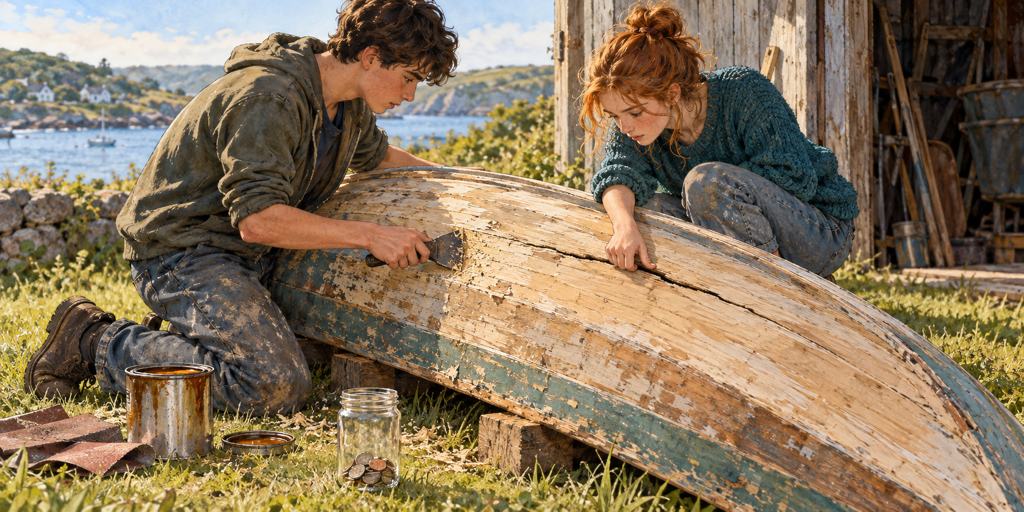
So they worked. Ronan cut grass for four houses on the harbor road. Astrid washed glasses at the pub on Friday and Saturday nights and came home smelling of lemon soap. They stacked turf, painted a gate, walked a neighbor’s two dogs, and carried boxes for the shop on delivery day. The jar on the barn window filled slowly: eight euros, then twenty, then sixty. In the evenings they scraped old paint off the hull until their arms shook.
The new board went in during the fifth week. They cut it, fitted it, glued it, and screwed it down, and it looked, Astrid thought, almost like something made by people who knew what they were doing.
On the Friday before the regatta they brushed on the first coat of varnish. The man in Nenagh had told them exactly what it needed.
“How much time?” Ronan had asked him.
“Three dry days,” he said. “You’ll get them. After that I’d not trust the sky.”