
Who Is the Boy at the End? (Part 1)
The photograph had been in a shoebox since 1974, when the library accepted a dead man’s papers and left them in the basement. Rhona found it on a Tuesday in November, between a receipt book and a wedding invitation. Eleven people stood in a row outside the sardine cannery on the waterfront in Belfast, Maine, in clothes that had been good once. On the back, in pencil: “cannery, about 1912.” Nothing else. No names.
“That’s the whole record,” Everett said when she brought it upstairs. He had run the town archive for nineteen years, mostly alone, and he had a way of stating bad news as though it were the weather. “Somebody knew all eleven of them. Then that somebody died.”
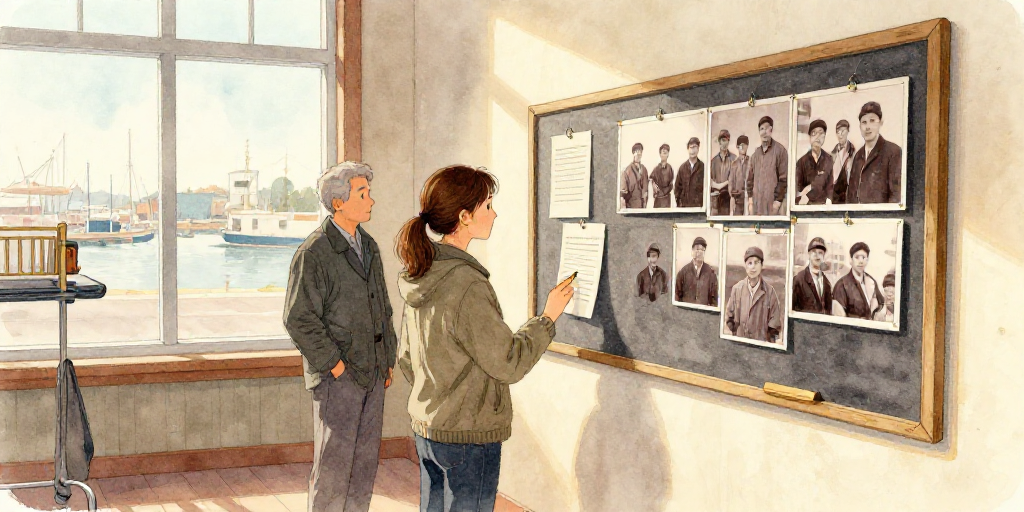
Rhona pinned the photograph in the entrance of the free library on High Street, at eye level, with a blank list beside it and a pencil on a string. Above it she wrote one line: “Do you know these faces?”
She had expected nothing. By Wednesday there were nine names. By Friday there were twenty-six.
That would have been wonderful if there had been twenty-six faces. There were eleven. The man third from the left had been named four times, and the four names belonged to four different men. A lady wrote that the tall woman in the middle had taught her mother in the third grade, and underneath, in pen, in another hand, somebody had written “No.”
Rhona copied every name into a notebook, in the order it arrived, without deciding anything. That was the part she liked, the part before the deciding.
On Saturday she counted properly. Ten of the eleven faces had names — too many names, names that contradicted each other, names in three different kinds of handwriting.
The eleventh had none. He stood at the end of the row, a boy of maybe fourteen, hatless, half a step out of the line, as though he had come into the picture late. In a week, in a town where nearly everyone’s great-grandmother had worked at that cannery, not one person had written anything under him at all.