
Two Fourteen
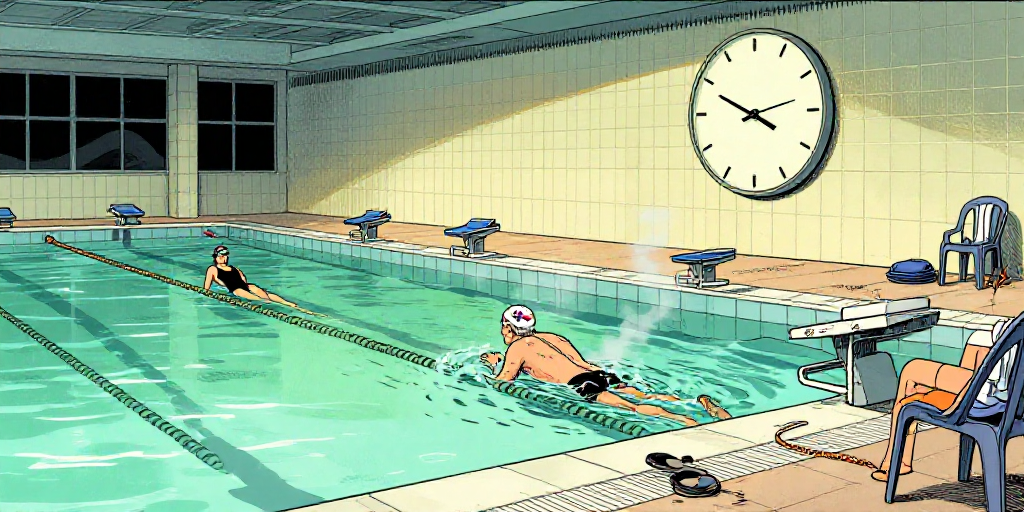
I hadn’t raced anybody since I was nineteen. I’m forty-one now, and the pool on Vale Road opens at six, which is the only hour of the day that belongs to nobody else.
The first morning in October I swam four hundred metres and stopped twice. I had told myself I would do a thousand. When I got to the wall the second time, a man in the next lane, who was wearing a white cap with a small Norwegian flag on it, looked up at the clock and told me my time. Then he swam away without saying anything else.
That was Halvor. He is seventy-three. All winter he was in the water before I got there, and all winter he did the same thing: whenever I stopped at the wall, he would tell me the number, and he never once said whether the number was good.
By December I could do the thousand. In January the water was so cold at six that two of the regulars complained to the council, and Halvor said the council had been sent that same letter every January since 1998. My shoulders hurt in a new place, and then they stopped hurting. I stopped setting an alarm, because by then my body woke up at half past five on its own.
The race was in March, at the county masters meeting in Bradfield. I had trained for five months. I came sixth out of eight. The woman who won was fifty and had swum for Wales, and she was very kind about it afterwards, which was somehow worse. I sat on a bench outside the changing room and waited to be disappointed, and it never really arrived.
Halvor took two buses to be there. He was standing at the far end with his coat still on when I got out of the water.
“Two minutes fourteen,” I said. “Sixth.”
“I know. I was watching.”
I suppose I wanted him to tell me that the winning wasn’t the point. He didn’t. He looked at the timetable on the wall by the door and asked me whether the pool was open on Monday.
On Monday, at six, he was already in lane four.
“Two fourteen,” he said, when I got in. “In November you were two twenty-two.”
That was the closest he ever came to telling me a number was good.