The Trial (Part 1)
Nadia had been tired for three years, and no doctor had ever explained it to her in one sentence.
It wasn’t the tiredness that a good night’s sleep fixes. It arrived at about eleven in the morning, and by two she was doing everything at half speed: the register at the garden center, the hose, the long walk out to the greenhouses. Her mother called it stress. Her manager called it a phase. Her own doctor, who was kinder, called it a disease and then apologized for the word.
“It’s a real one,” he said. “It just doesn’t have a famous name.”
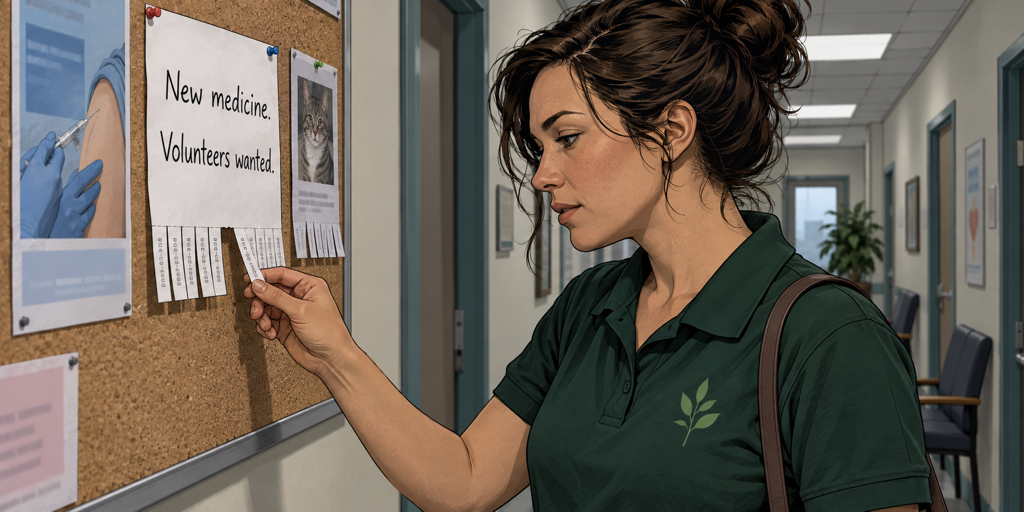
The notice was on the wall at the clinic on Denison Avenue, between a poster about flu shots and a photo of somebody’s lost cat. New medicine. Volunteers wanted. There was a phone number cut into little strips at the bottom, and only one strip was missing.
Nadia took the second one.
Dr. Omar had a small office with a window that didn’t open and a bowl of hard candy that nobody ever touched. He was younger than she’d expected, and he talked to her for forty minutes without once looking at his computer.
“I want to be clear about one thing,” he said. “This is an experiment. That’s the honest word for it. We think this drug helps people with your kind of tiredness. We don’t know yet.”
“What do you mean, you don’t know?”
“Sixty people are joining. Half of them will get the drug. Half will get a pill with nothing in it, and nobody in this building will know which is which until the end. Not you. Not me.” He put his pen down. “It’s the only way the answer means anything.”
“And if I’m in the half with nothing?”
“Then you’ll have given twelve weeks to a question,” Omar said. “I know that isn’t much to offer.”
She signed on a Tuesday. Walking back to the car, she realized that he hadn’t promised her anything, and that this was exactly why she believed him.