
The Brass Key
Marisol had owned the little bakery for eleven years, and the brass key still turned the same way every morning.
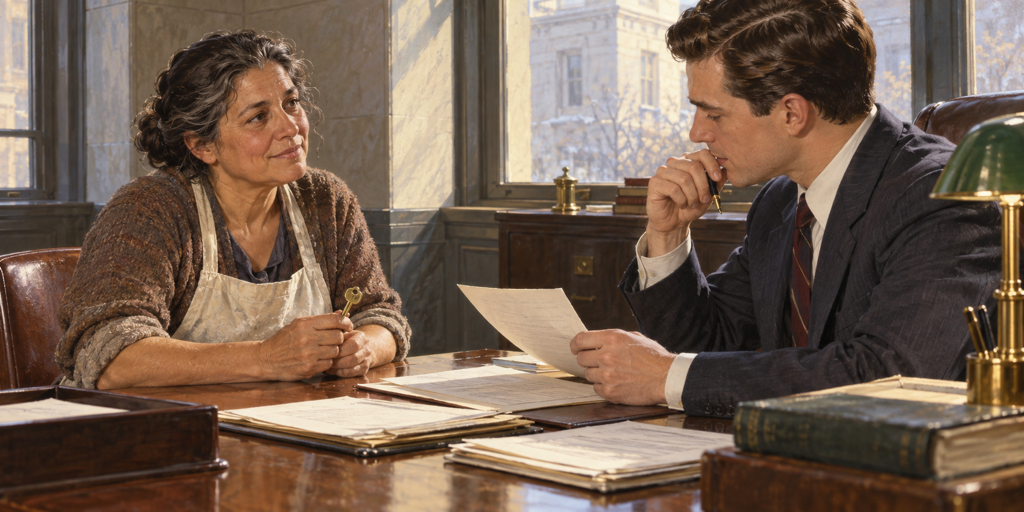
She held that key in her hand now, in the cold office of the bank, while a young officer read her papers.
“So you want to apply for a loan to open a second shop,” he said. “Tell me about the business.”
“We make good bread,” Marisol said simply. “The shop is small, but it never empties.” “If we get the loan, we will rent the place next door.” “We could double the kitchen.”
The officer studied the numbers. “Your profit is steady, but it's not large.”
“It's enough,” she said. “I employ four people. They have worked with me for years. They are all qualified, all trained by me. If the new shop works, I could employ four more.”
He tapped his pen. “And if it doesn't work?” “A second shop means a second rent, a second set of payments. You could lose everything you've built.”
Marisol turned the brass key over in her fingers. She thought of the morning she first opened the door, alone, terrified, the owner of nothing but an empty room and an old oven.
“I might lose it,” she said quietly. “But I started with much less than this. If you say no, I'll come back next year and ask again.”
The officer looked at her for a long moment. Then, for the first time, he smiled.
“Let's see what we can do,” he said.