
The Antarctica Signal (Part 4)
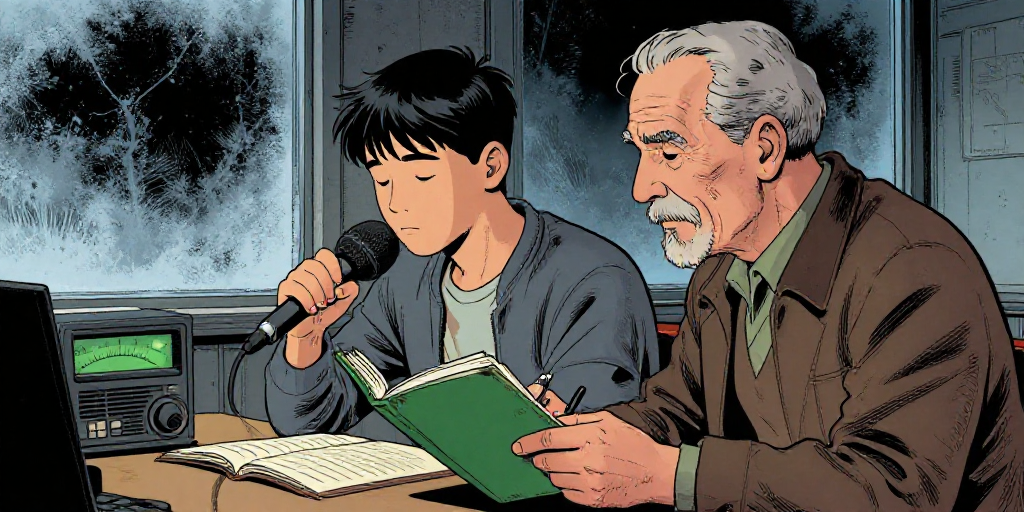
The night it worked was the coldest of the year. There was ice on the inside of the shed window, and when Kenji breathed out he could see it.
Cold, clear air is good for radio, Alvarez had explained, though he made it sound like an accident rather than a reason. The wind had dropped. The path south, over eight thousand miles of open water, was as direct as it would ever be.
They switched on at 5:20 and waited.
At 5:38 the continuous hiss thinned out, the way fog thins, and there was a voice inside it. It was clearer than before. Not clear — clearer. A man, speaking English with the calm, slow rhythm of somebody reading numbers to a machine.
“…KC4AAC. Kilo Charlie Four Alpha Alpha Charlie. Palmer Station, Antarctica. Listening.”
Kenji didn’t say anything. He couldn’t.
Alvarez pushed the microphone across the table. “Your signal,” he said. “Focus. Callsign twice, slowly, then stop talking.”
“I don’t have a callsign.”
“Use the club’s. Whiskey Seven Alpha Sierra Tango. Go.”
Kenji went. His voice came out higher than he wanted it to.
The answer came back eleven seconds later, and it used their callsign, and Kenji’s hand closed on the edge of the table.
Then the numbers. The man at Palmer gave them a signal report — five and three, which means readable but weak — and the temperature outside his window, which was warmer than Oregon, because it was summer down there and the ice was breaking up in the bay. The wind, he said, was the only extreme thing about the day. Alvarez gave a report back: five and five. Loud and clear, from Antarctica.
The contrast made Kenji laugh out loud — ice on the inside of their own window, and a man at the bottom of the world telling them it was a nice afternoon.
Forty seconds later the man said good night to Oregon, and the hiss came back, and that was all of it.
It wasn’t much. Two callsigns, four numbers and a weather report. Eleven weeks of work, and in the whole exchange nobody said a single thing a person would remember.
Alvarez sat still for a while. Then he took the club logbook out of the drawer — the old one, in the hard green cover, with entries in two different hands until October 1998 and one hand after that — and opened it at the next empty line.
“It exists,” he said.
He wrote the date, the time, the frequency and the callsign. In the last column, where the operator’s name goes, he didn’t write his own.
“Spell it for me,” he said. “The family name too. I want it right.”