
The Antarctica Signal (Part 1)
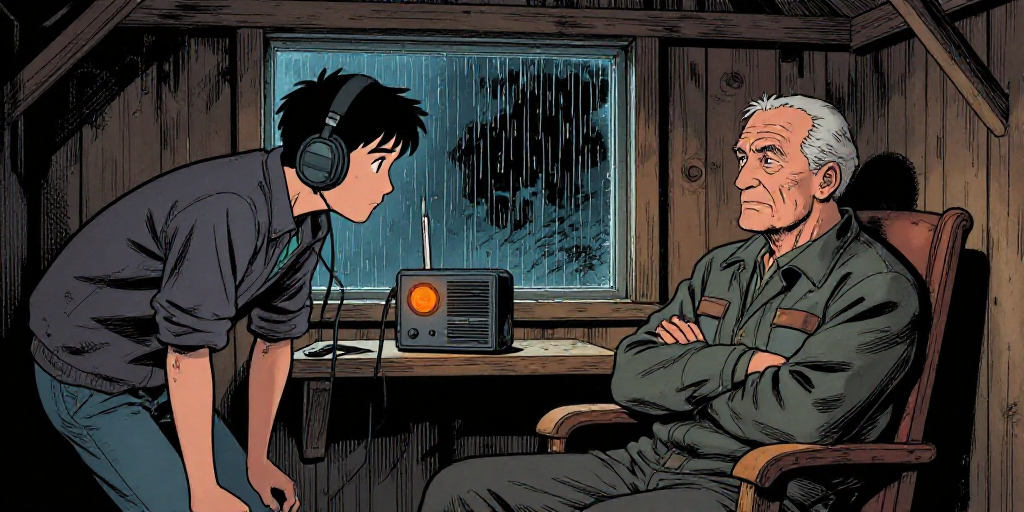
The Astoria Amateur Radio Club met in a shed behind the fire station, and the shed was smaller than Kenji had expected. Two chairs. One table. A radio the size of a microwave, with a hundred little buttons and a dial worn smooth in the middle.
“You the school kid?” the old man asked. He didn’t stand up.
“Kenji. Mr. Alvarez?”
“Alvarez is fine.” He turned the dial a quarter of a turn. “Sit down and don’t touch anything.”
Kenji sat. Outside, the rain came in off the river and hit the metal roof in waves. Inside, the radio made a long continuous hiss, like water running in another room. Every few seconds a voice came out of it — a truck driver in Idaho, a man in Sacramento reading out his weather, two people in Canada arguing about a football game.
“That’s it?” Kenji said. “People just talk?”
“That’s it.”
They sat there for an hour. Kenji was nearly asleep when he heard it.
It came under the hiss, not over it: three or four seconds of something, a voice or the shape of a voice, and then nothing. A minute later it came again, weaker.
“There,” Kenji said. “Did you hear that?”
Alvarez didn’t move. “Hear what?”
“There’s somebody under the noise.”
The old man listened. His hand rested on the dial without turning it. When the sound came back a third time, Kenji watched his face and saw nothing at all.
“Static,” Alvarez said. “Rain on the aerial. The wind moves the wire and it makes a sound like a voice. It’s been doing that for thirty years.”
“It said letters. Kilo. Charlie. Four. The same three, every time.”
“You heard what you wanted to hear.” Alvarez switched the radio off, and the shed went so quiet that Kenji could hear the fire station clock through the wall. “Go home, kid. It’s a school night.”
Kenji went home. But before the radio went off, he had written it on the back of his hand: 5:42, and under the time, three letters he didn’t understand yet.