
Nine Out of Forty
Lior needed forty volunteers, and she got them the way most third-year psychology students do: she sat at a table outside the library at the University of Haifa with a box of pens and asked.
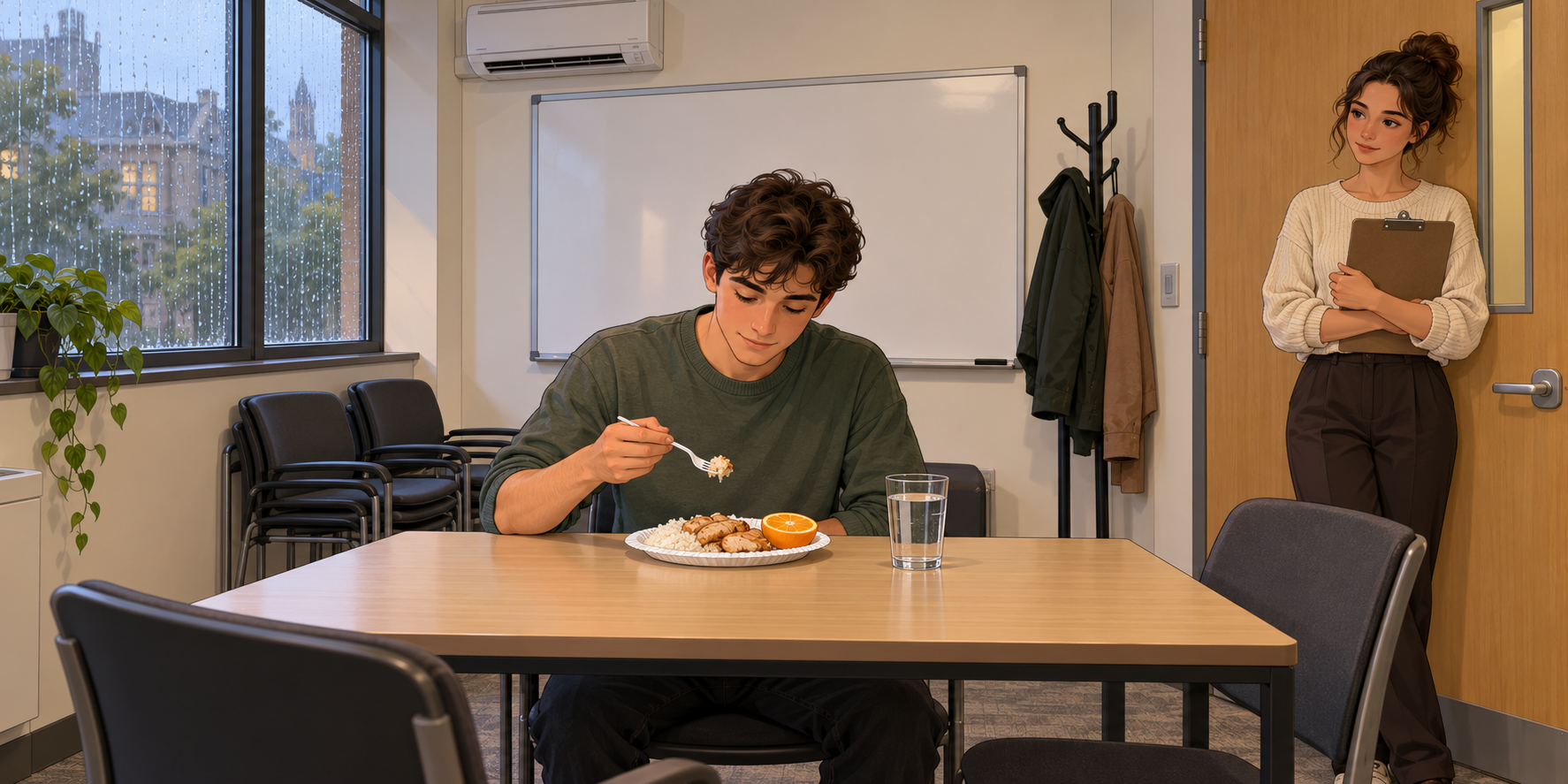
The experiment was simple. Each volunteer came to a small room on a Tuesday and ate the same free lunch: rice, chicken, half an orange, a glass of water. Nobody was told why. Exactly one week later, each of them came back and wrote down everything they could remember about that lunch.
Lior expected one factor to explain the results, and that factor was taste. The whole idea her thesis was built on was that people remember food they liked and forget food they didn't.
Here is what forty people actually wrote.
One wrote that the room was too warm and the window didn't open. One wrote about the woman with the clipboard, meaning Lior, and what she had been wearing. One wrote about the noise of the air conditioning. One wrote about the rain that started while she was eating, and then, at the bottom of the page, “something with rice?” Six of them described the plastic fork. Four described a person who had been waiting in the corridor outside. Two described a completely different lunch, from a different week, in a different building, with total confidence.
Nine people out of forty remembered the orange.
Lior spent three days looking for her effect in the numbers, and it was not there. The individual answers were full of detail, pages of it, and almost none of the detail was food. The thing she had come to measure did not exist in her data.
Her supervisor read the pages twice and asked her one question: what do all these answers have in common?
They were all about the room. The temperature, the noise, the rain, the other people, the fork. Her volunteers had not stored a lunch. They had stored an afternoon, and the lunch was somewhere inside it.
Lior kept all forty pages. The thesis she is writing now has a different title: “What People Say When You Ask Them About Lunch.” The first chapter is about a plastic fork.