
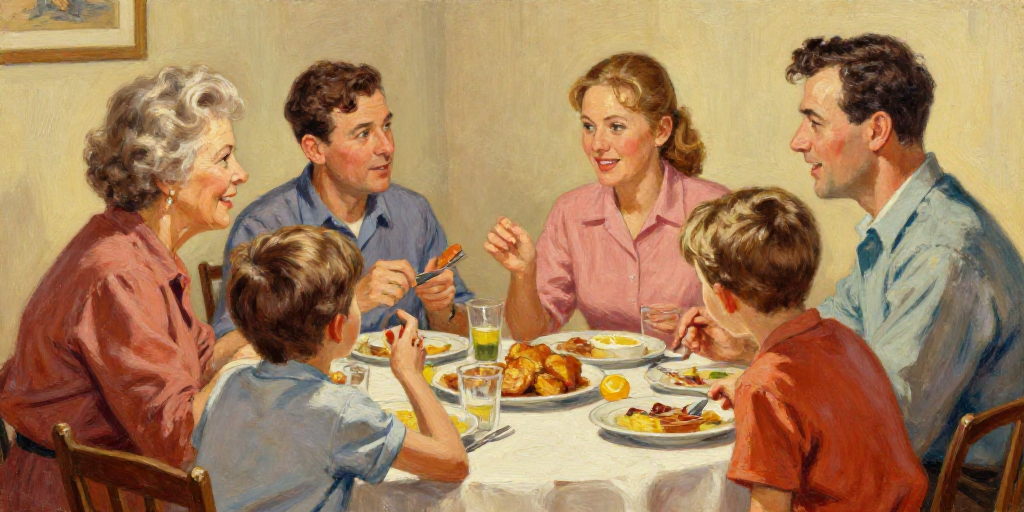
Three Languages at Dinner
In many immigrant families, dinner isn’t only about food. It’s also about which language you speak.
Around a single table, three languages can travel at the same time. The grandmother speaks only her native language, the one she brought from her home country. The parents speak that language too, and between themselves the city language they grew up with, and now the language of the new country. The children, who were born here, understand the old language but usually answer in the new one.
So dinner becomes a kind of live translation. The grandmother asks a question. The mother repeats it for the children in the language they prefer. A child answers, and the father turns that answer back into the grandmother’s words. Nobody thinks this is strange. It’s simply how the family talks.
This happens in kitchens worldwide. In cities everywhere, families move between languages during a single meal. Something is always a little lost — a joke that only works in one language, a word with no good translation. But something is also gained. The children learn that meaning can travel between languages, even when it doesn’t travel perfectly.
By the end of the meal, everyone has understood everyone else, through three languages and a lot of patience. And that, in its quiet way, is a small wonder that happens every night, in millions of homes, without anyone really noticing.