
The Voice After Dark
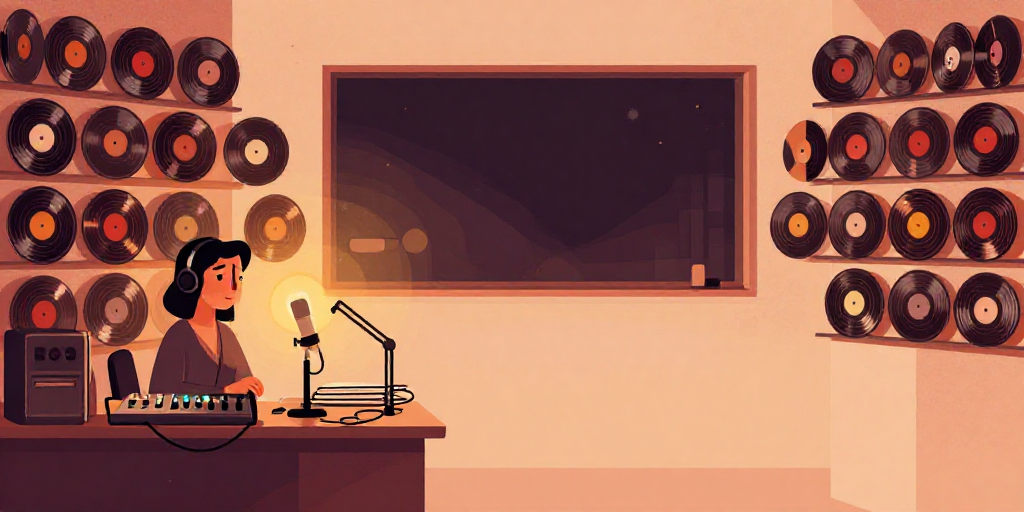
Every evening at nine o'clock, a small radio station in the town of Kendal begins its quiet show. The presenter sits alone in a tiny room with one microphone and a wall of old records. For two hours, she talks softly to people she cannot see.
Local radio is an old kind of media, and many people thought it would die. The internet has so much music, so many videos. Why would anyone still listen to one woman and her records?
But the listeners stay. Most of them are awake late at night — drivers, nurses, parents with a new baby. They like that the show is live. They like that a real person is choosing each song, right now, just for them.
The presenter takes calls too. A listener might phone in and ask for a song, or simply say hello and talk for a minute. The recording of each show is saved, but she says the live moment is what matters. “When I press the button,” she says, “I never know who is out there.” “That might be a stranger in a cold car, or an old friend.” “I just talk, and I hope someone is listening.”
Sometimes she reads a short review of a new album. Sometimes she only plays music and says nothing at all. The show has no rules, and that is the point. It is based on one simple idea: that a calm voice in the dark can keep a lonely person company.
The big stations have more money and more speakers. But they do not have this. At nine o'clock, in one small room, the light goes on, and the voice begins again.