
The Shoe Box
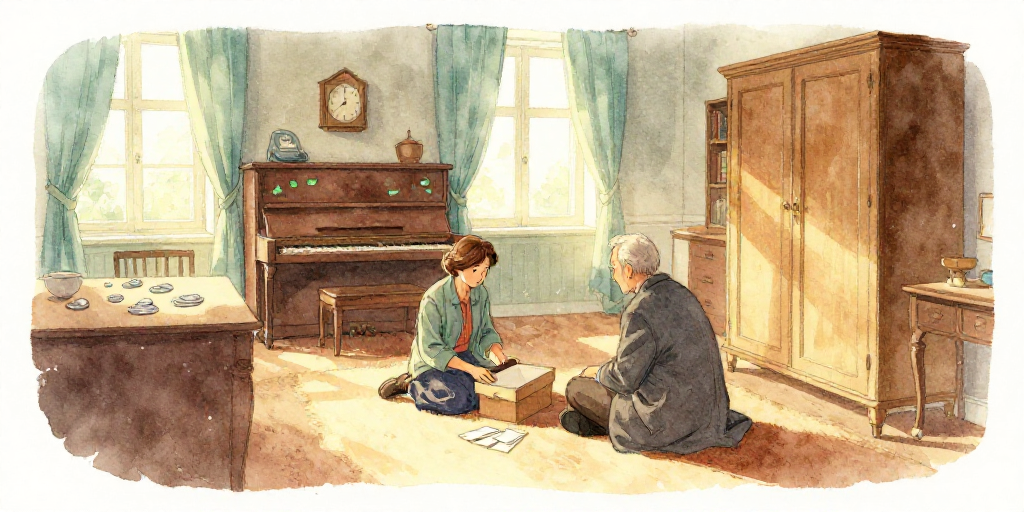
The estate people had put small green stickers on everything worth money. There were a lot of green stickers. The relatives had already been through the house once and taken what they wanted.
“Twelve chairs,” Peter said, reading off the list. “A piano nobody in this family plays. Two hundred and something pieces of silver.”
June was on the floor by the bookcase with a box in her lap. “She had a servant, you know. Until 1974. There's a bell in the dining room that you press with your foot.”
“I know about the bell.”
Their grandmother had liked luxury in an old-fashioned way: heavy curtains, a long table, glasses that had to be washed by hand. She had also kept every gas bill since 1968. The house held both of those facts at once, and June had spent two days trying to decide which one was the real one.
“Our uncle wants the portraits,” Peter said.
“He can have the portraits.”
“You don't want anything?”
June looked at the room — at the fancy clock, at the silver, at the green stickers. Every object in it was a possession. Not one of them was hers.
“I don't know,” she said. “I keep waiting to want something.”
At four o'clock she found the records at the bottom of the wardrobe, in a shoe box, under a scarf. Not music. Small paper cards, one for each Christmas, going back forty years: who came, what was cooked, what the weather did. 1981. 1994. 2007, the year their mother was ill, and that card said only: everyone here. Good year.
June sat back on her heels and read four of them out loud. Peter stopped moving chairs and listened from the doorway.
“That's the thing,” she said. “That's the thing I want.”
“It's a shoe box, June.”
“I know what it is.”
Peter came and sat down on the floor beside her, still in his coat, with the whole house left to do. “I wish she'd written more of them,” he said. “Read 1994 again.”