
The Most Expensive Word in English Education
If an English person tells you that their son is at a public school, they are telling you that they pay for it. Often they pay more for a single term than many families earn in three months. In the United States, in Canada, in Australia, a public school is the free one — the one the state pays for. In England it is the opposite, and this one word has probably produced more confused conversations than anything else in the language of education.
The strange part is that the word made perfect sense once.
Six hundred years ago, a rich boy in England was taught at home. A private tutor was hired, he lived in the house, and he taught the children of that family and nobody else’s. That was a private education in the plain meaning of the words. It happened indoors, behind one family’s door, and no other child could get near it.
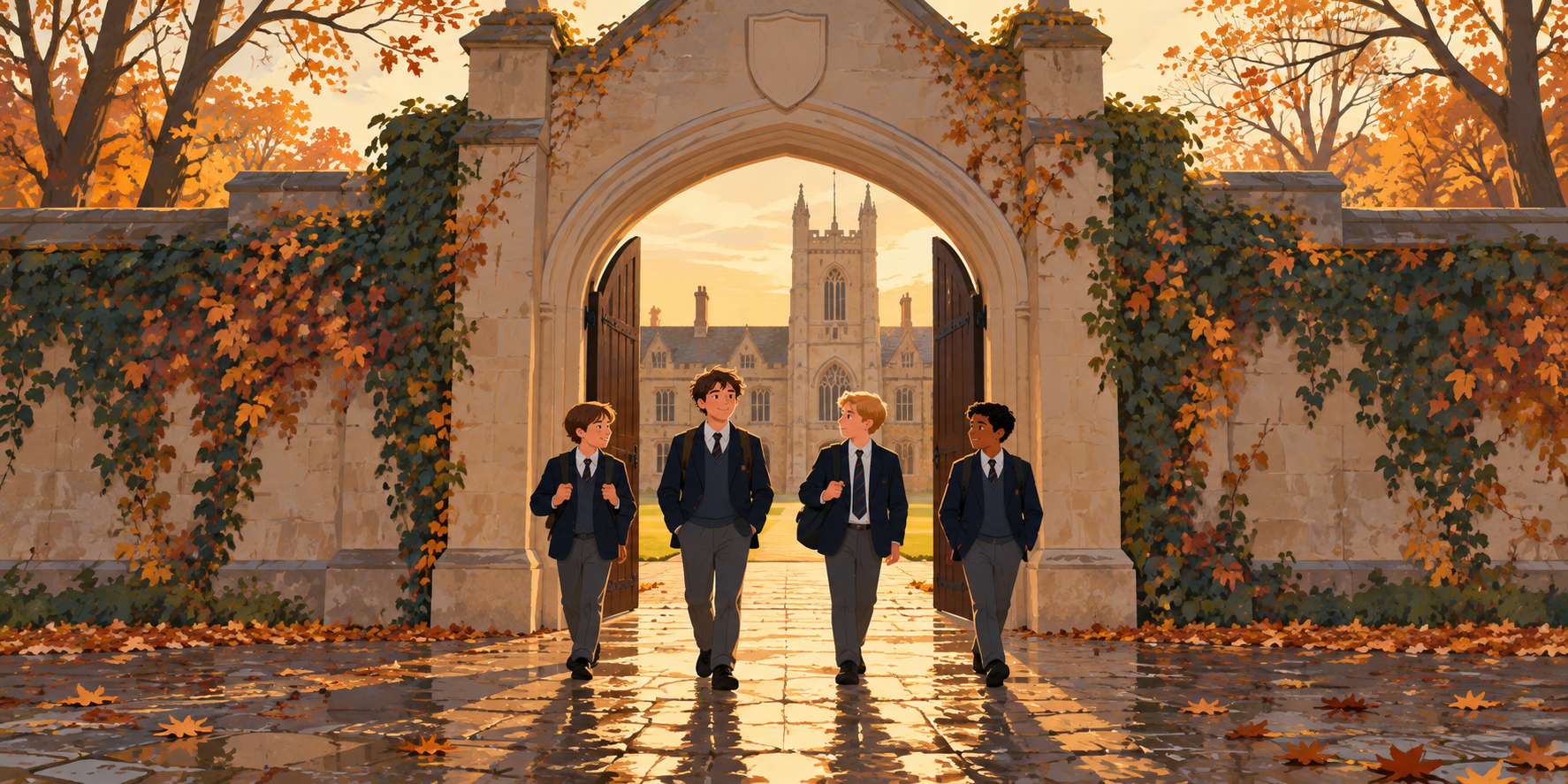
Then schools of a new kind were founded. Winchester opened in 1382 and Eton in 1440, and what made them different was that a boy did not have to belong to the household. He came from anywhere in the country, a fee was paid, and he lived at the school with a hundred other boys. Next to a tutor in a bedroom, that was public. The word meant open. It never meant free.
The trouble arrived four hundred years later, when governments started building schools for everybody. From 1870 the state was paying, and in most of the world those free schools took the obvious name and became public schools. England could not use it, because the name was already sitting on the old ones. In 1868 an act of parliament had even listed seven of them by name, which fixed the label in law. So England had to invent a separate phrase for the schools that the public genuinely pays for. They are called state schools.
It gets worse the further you go. English secondary schools do not have grades; they have years, and the older schools call them forms. The person in charge is a headmaster or a headmistress in some schools and a head teacher in others. A pupil at an English public school is, to the rest of the planet, a private-school student — and English people know this perfectly well, which is why more and more of them now say private school, or independent school, and let the old word go quiet.
But the old word will not actually go away, and it is worth asking who could remove it. Nobody owns a name like this. There is no office you can write to and no form you can fill in. And the schools themselves are the last people on earth who would want it changed, because five hundred years is precisely what they are selling. The confusion is not a fault in the product. It is the product.