
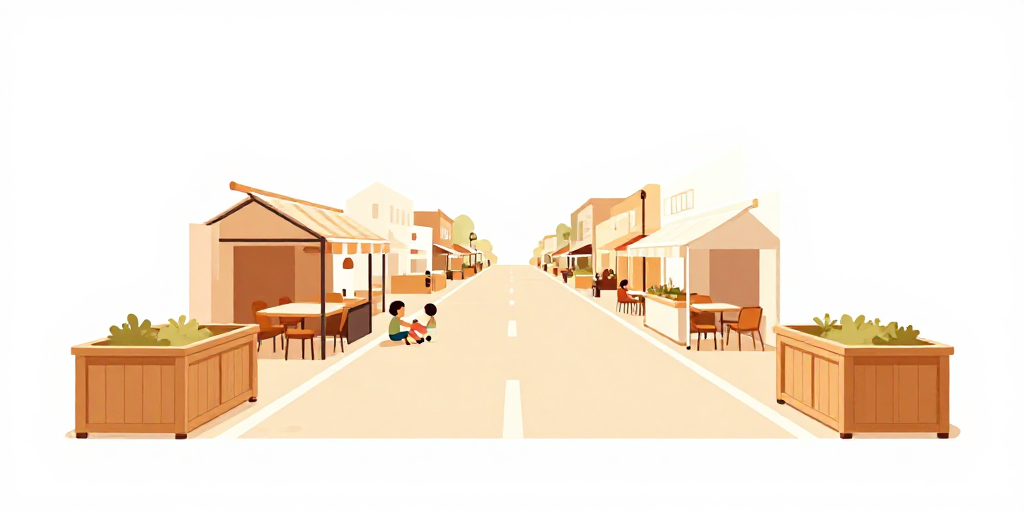
One Month Without Cars
For four weeks in autumn, Marsh Street was closed to cars. Wooden boxes of plants were put across the road at each end, the parking spaces were painted over, and the buses were sent round by the ring road. The council called it an experiment and promised a report. That report was published on Tuesday. It is worth noticing what is not in it.
At first the plan was opposed by most of the shopkeepers, and their view was simple: their customers arrive by car, stop outside for ten minutes, buy a bag of vegetables, and drive home. Remove the parking and you remove the customer. The butcher warned that he would lose his morning trade, and the risk, as the street saw it, was money.
Others wanted it. The café at the top of the street has been asking for outdoor tables since it opened; its indoor room holds nine people and a dog. The market traders wanted the space. The result was a month of argument in this paper’s letters page, most of it about traffic and about tills.
So what happened? The traffic did not disappear; it moved. Most of it went onto Cross Lane and the bottom of Hill Road, and the queue at the school junction was longer before nine and shorter after four. Drivers who used to cut through Marsh Street had found another way within about a week, which is what the transport officers expected and why the residents of Cross Lane are extremely unhappy. Traffic levels across the area changed very little. The traffic was not removed; it was moved, and it landed on somebody.
As for the tills: the butcher’s morning trade did fall, and he says so. The baker noticed no change. The café put six tables outside and filled them. The market traders took more cash on Saturdays and less on Tuesdays, which they say is normal for autumn. Added up, the impact on the street’s sales seems to have been small. That is the number everyone argued about, and it turned out to be the least interesting thing in the report.
Because something else happened, and nobody measured it. People stayed. On an ordinary Saturday, a shopper is on Marsh Street for as long as the shopping takes. In October they sat down. Children were on the road itself, and their parents let it happen, because there was nothing to warn them about. A man with a guitar played outside the bank and was not moved on. The café staff say the same people came back in the afternoon.
None of that is in the report, because the council counted cars and receipts, and nobody counts the time people spend on a street. The boxes of plants came out on the second of November, and the parking spaces have been repainted. The council votes in January, and it will argue in the language of the things that were easy to count.