
Hive Four
Arthur had kept bees behind his house outside Brownsville for nineteen years, and in general he could tell you what was in a jar before he opened it. The hives at the top of the slope gave him clover honey, thick and pale gold. The two down by the ditch gave him something darker, out of the blackberries. Hive four, in the corner by the fence, gave him whatever happened to be flowering that month.
In August, hive four gave him something else.
He noticed it when he poured the first jar. The color was wrong — very pale, almost grey in the window light. He tasted it, and the taste stayed in his mouth far longer than clover honey did, cool and faintly soapy, more like a smell than a flavor. His first thought was that the hive was sick. He spent a whole Saturday going through it frame by frame, looking for the usual problems, and found nothing at all. The bees were fat and busy and completely uninterested in him.
At the farmers’ market the following week he put a spoonful in front of a woman who had been buying his honey for years. She tasted it and laughed.
“That’s lavender,” she said. “My sister makes soap with it. Where are you getting lavender?”
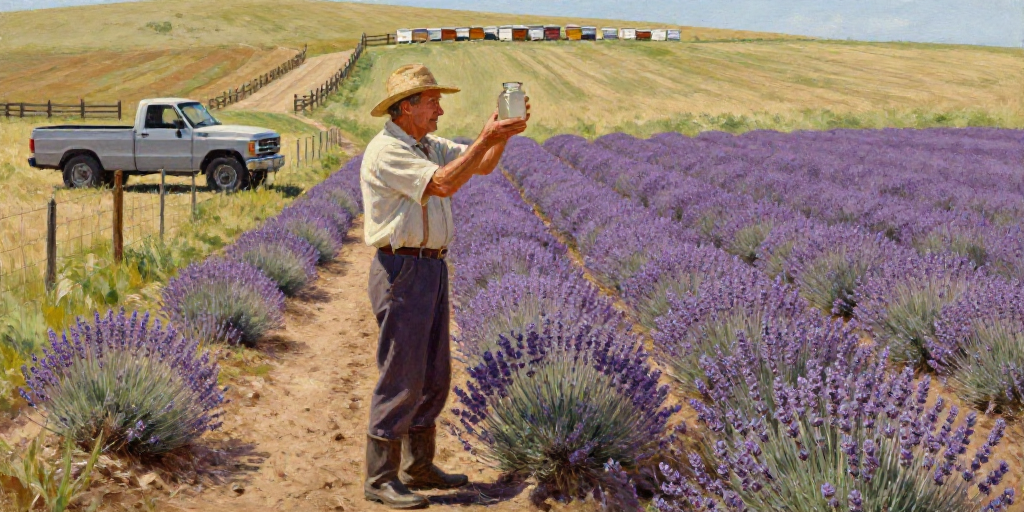
He wasn’t. He had never planted any. But bees will fly three miles for a good field, so on Sunday he drove the back roads with the windows down, and two fields over, on the land that used to be the Mercer place, he found ten acres of it: young plants in straight purple rows, put in that spring by whoever had bought the farm.
Arthur had spent nineteen years deciding what his bees should eat. He had moved hives, planted clover, cut back the ivy, argued with a neighbor about spraying. The one honey people would end up asking him for by name, in contrast, had nothing to do with him at all.
He took a jar over on Monday and left it on the porch of the Mercer place. On the label, in his own handwriting, he had written a single word: Lavender.