
Best Wild Corner
Bartholomew had won the front-garden award four years running, and by the fourth year he had begun to dread the letter.
It was not the award itself. The award was a small wooden plaque and a handshake in the church hall, every July, in front of about ninety people. It was what the result did to Meadow Lane. The woman opposite had started apologising to him about her own hedge whenever she passed his gate. The man at number nine had dug up his flower beds altogether, put down grey stones, and told anyone who asked that he would rather not compete. At the announcement people clapped, and then they looked at their shoes.
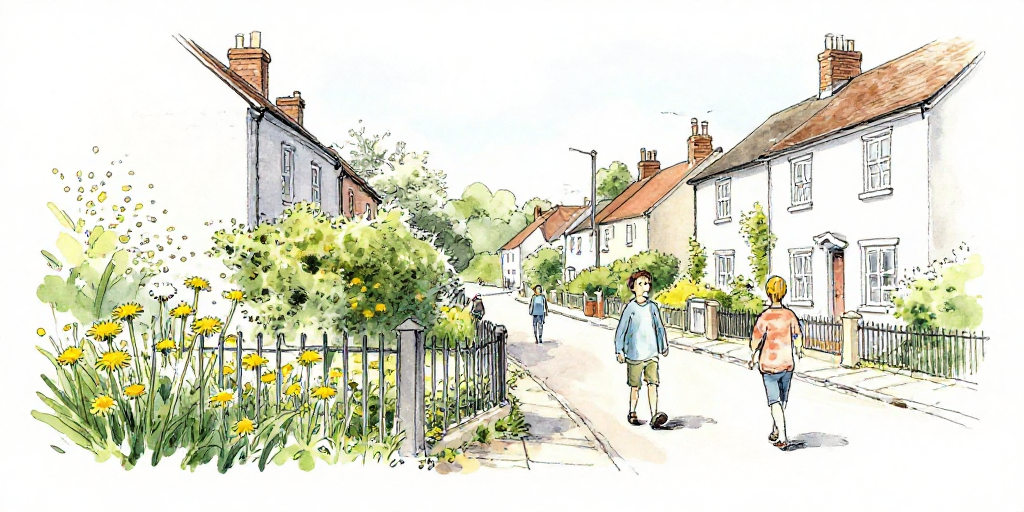
So that spring Bartholomew set out to lose. He did not cut the grass. He moved his pots round to the back, where nobody could see them, and he left the dandelions where they came up. By May the front of his house looked like a small field with a gate in it. Twice he caught himself reaching for the shears, and twice he put them down again.
The letter arrived in July, as it always had.
The judges, it said, had added a new category that year: Best Wild Corner. They had been unanimous. The note explained that long grass and dandelions feed insects early in the year, when there is little else for them, and that the committee had been hoping for some time that somebody on one of the older roads would try it. The last line said the judges hoped his neighbours would now feel free to do less, as he had.
Bartholomew read it twice. He could not argue with any of it.
He hung the fifth plaque next to the other four and went out to stand at his gate. Down the road, at number nine, a few thin green shoots had come up between the grey stones, and nobody had pulled them out. By the end of the summer three gardens on Meadow Lane had stopped being cut. Bartholomew stood at his gate on a warm evening in September, and for the first time in five years, nobody came out to apologise to him.