
Anyway
Craig knocked at ten past six, which is not a time when anybody is just passing.
“Evening,” he said. “I was up this end anyway. Thought I’d say hello.”
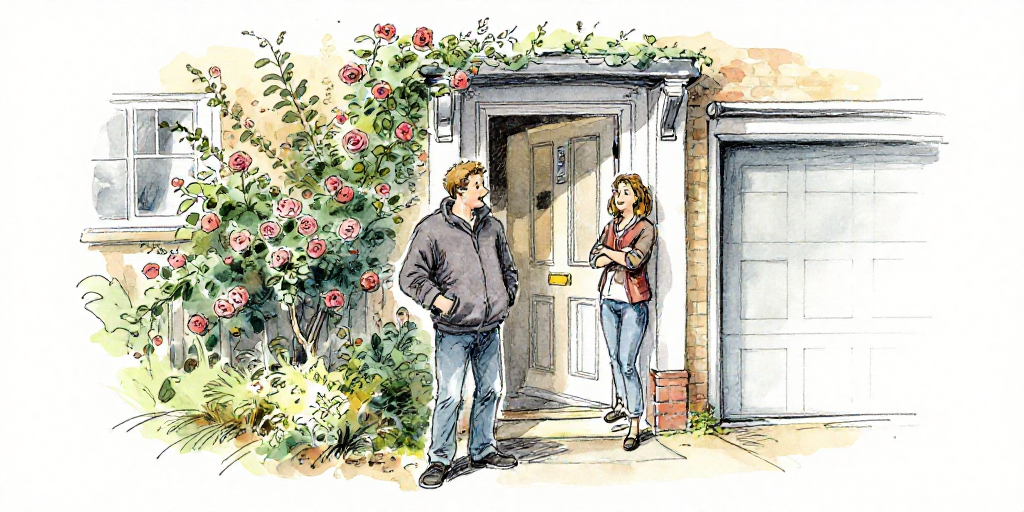
Willow had watched him come up the path from the kitchen window. He had looked at her garage twice on the way. “Nice to see you,” she said, and stayed in the doorway, because he clearly wasn’t coming in.
She had known since the first sentence. Nobody is up her end. Her end is a cul-de-sac with six houses in it and a hedge at the bottom.
“Turned out nice in the end, didn’t it. They promised us rain all week.”
“They always do. How are you, anyway?”
“Not too bad. Can’t complain.” Craig looked at the step. “Your roses have gone mad this year. What do you put on them?”
“Nothing. I forget about them and they seem to like it.”
“That’ll be it. Ours get fed every fortnight and they sulk.” He laughed at his own joke, stopped, and started again. “By the way — did they take your bins on Thursday?”
“They took mine.”
“They left ours. Second time this month. I’ve phoned the council twice and both times a very nice woman has told me it’s been logged.” He put his hands in his pockets. “Anyway. I won’t keep you.”
Nobody said anything for a moment. A car went past.
“Anyway,” Craig said again. “You haven’t still got that ladder of your dad’s, have you?”
“It’s in the garage,” Willow said. “The garage’ll be unlocked. I did it when I saw you looking at it from the gate.”
Craig went a bit pink. “You could’ve just said.”
“And miss all that?” Willow said. “You had the weather, the roses and the bins to get through. It’d have been rude to stop you.”
He was still laughing when he came back down the path with the ladder on his shoulder, shouting something about bringing it back Sunday, and she said what everybody says, which is that there’s no rush.